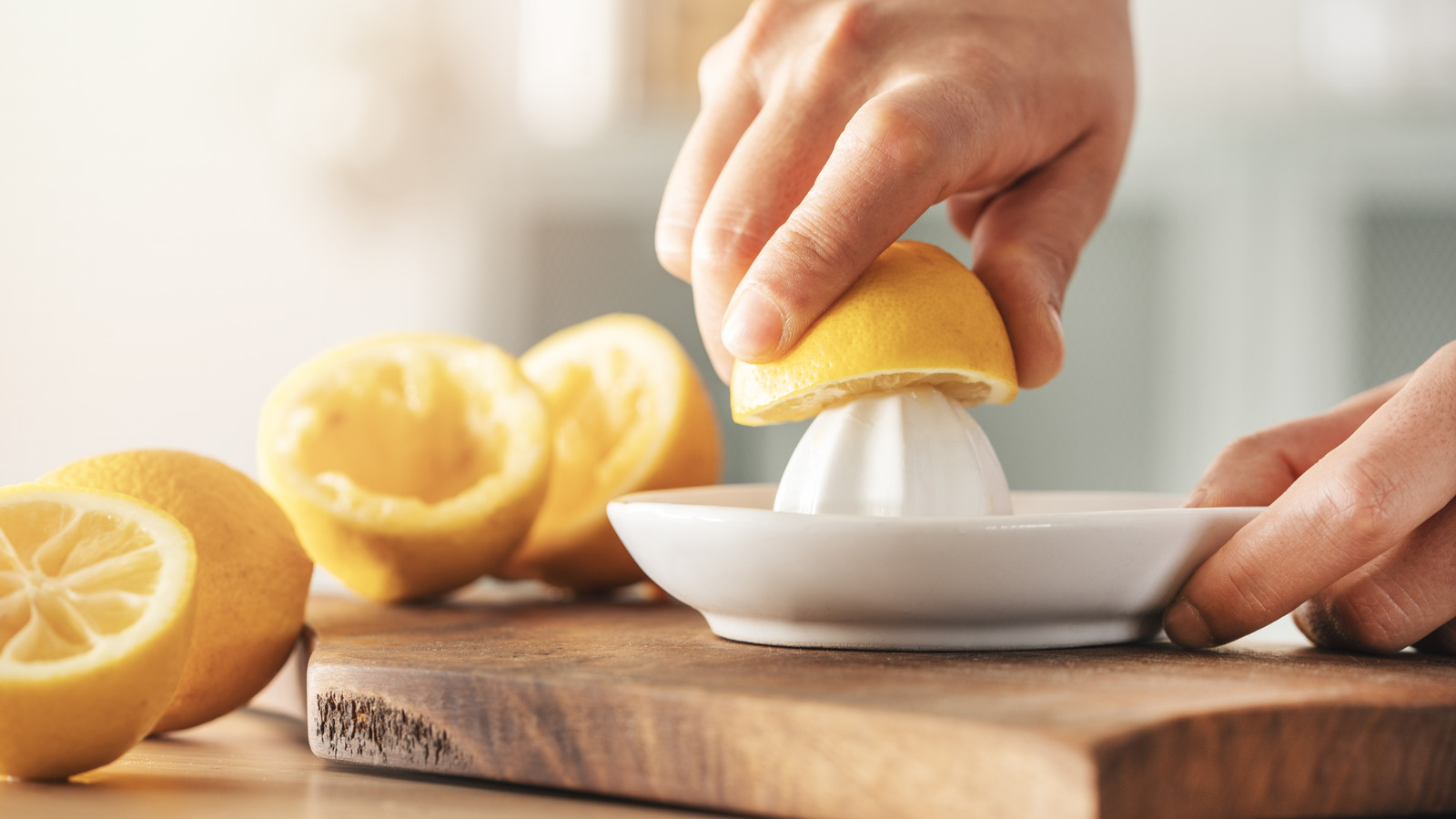
"the answer is quite straightforward, and Samantha Merritt, creator of Sugar Spun Run, has one simple rule: If lemon is the primary flavor of the dish, use fresh lemon juice. "If I'm making a lemon meringue pie, lemon bars, lemonade, or lemon curd, the lemon flavor is the main feature of the recipe," Merritt says, "so I'll always opt for fresh-squeezed lemons." It offers the brightest, most natural flavor, and isn't that what we all want when biting into a slice of lemon meringue pie?"
"Another clear advantage of using fresh lemons is the lack of preservatives. Many bottled juices are from concentrate and contain a number of other ingredients and stabilizers to extend the shelf life and provide predictability. This can make the end flavor dull or overly acidic. "Concentrated lemon juice tends to have a flatter taste, and, in my opinion, can sometimes taste a bit like a cleaner," Merritt says."
If lemon is the primary flavor of a dish, use fresh lemon juice for the brightest, most natural flavor. Fresh lemons lack preservatives, providing cleaner acidity and more vibrant citrus notes. Bottled juices are often from concentrate and include stabilizers and added ingredients to extend shelf life, which can flatten flavor or make it overly acidic or resemble a cleaner. For non-primary-flavor uses where consistency or longevity matters, bottled juice can be convenient. When choosing bottled, prefer 100% pure lemon juice not from concentrate with no added flavors. Santa Cruz organic is an example of a single-ingredient bottled option.
Read at Tasting Table
Unable to calculate read time
Collection
[
|
...
]