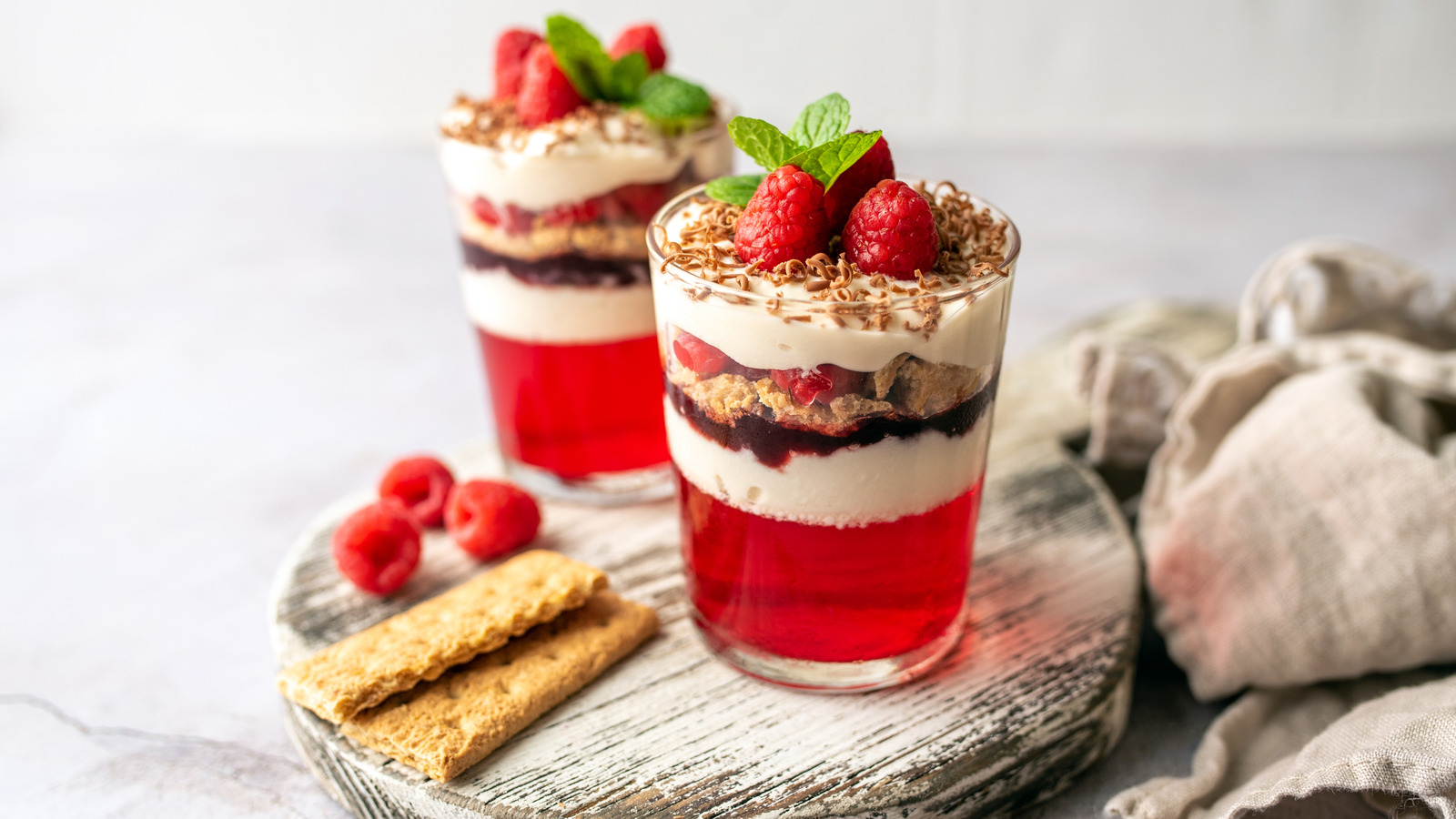
Jell-O 1-2-3 debuted in 1969 as a powdered dessert that separated into three layers—mousse, custard, and jelly—after stirring, whipping, and chilling. The layered effect relied on gelatin, a collagen-derived protein that swells and sets when cooled; vigorous whipping introduced bubbles that created different density strata which rose or sank during cooling. The finished dessert presented a parfait-like tower of pastel textures: spongy top, creamy middle, and wobbly base. Mid-century American food culture favored visually dramatic, convenience-oriented confections, and commercially boxed gelatin products democratized elaborate molded desserts previously associated with wealth and refinement.
"In 1969, Kraft launched a dessert that looked like a magic trick: one packet of powder, three distinct layers. Called Jell-O 1-2-3, it promised three tantalizing textures - mousse, custard, and jelly - all separating neatly in the fridge without any extra tricky technique or work. The result was a parfait-like tower of pastels which would be spongy on top, creamy in the middle, and wobbly at the base. For a culture already leaning hard into convenience, it was a giant leap for mankind."
"What made the trick possible was the science of plain old gelatin, a protein derived from collagen that swells and sets when cooled. When you first whisked the mix gently, the gelatin dissolved evenly into the hot liquid. A follow-up blitz at high speed whipped air into the mixture, creating different densities of foam. As the dessert cooled, those densities naturally separated."
Read at Tasting Table
Unable to calculate read time
Collection
[
|
...
]