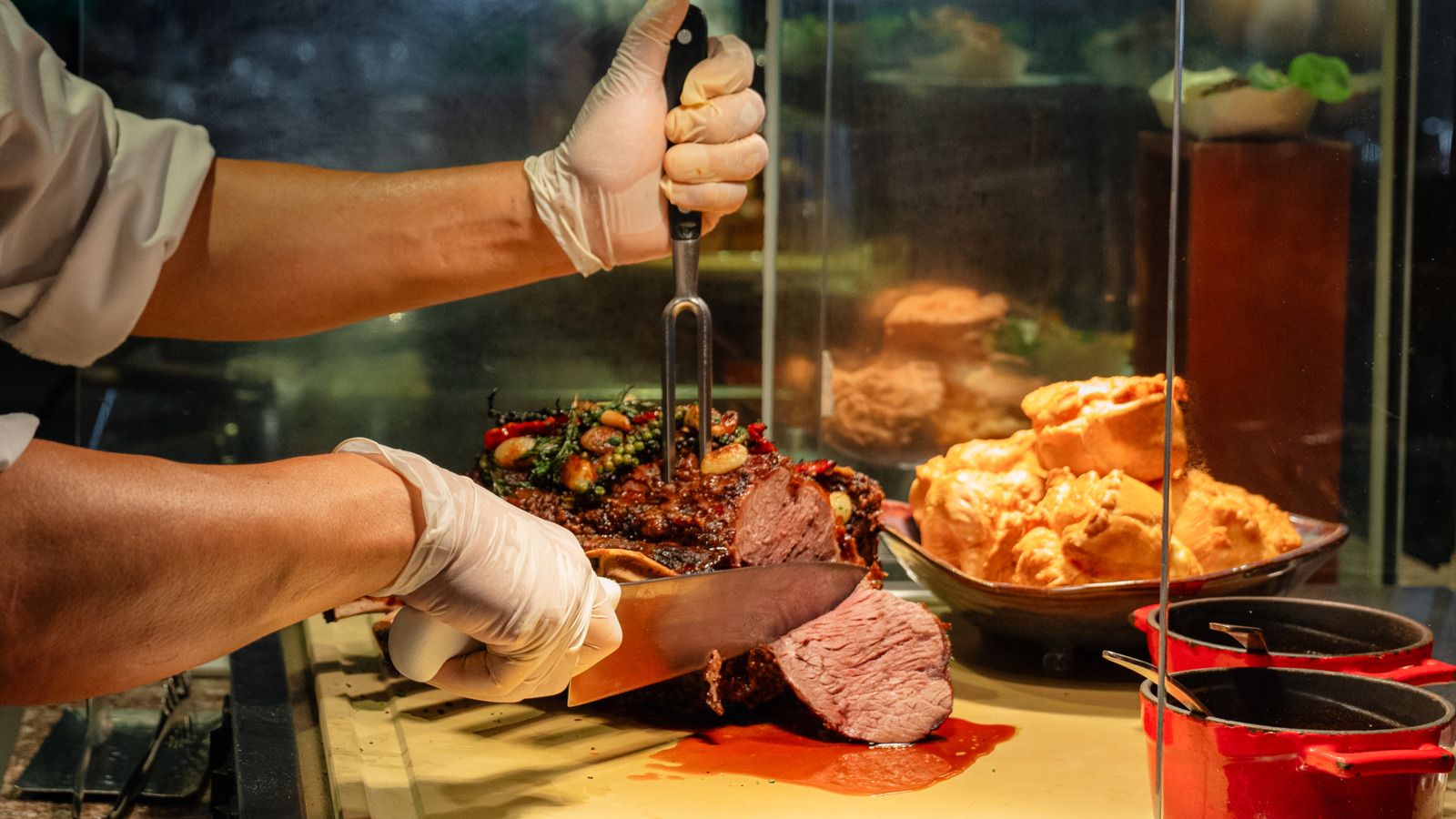
"Two reasons for this are that prime rib can be expensive, and it takes a long time to cook properly. As the cost of beef has gone up and consumption habits have changed (i.e. people are eating less red meat due to health and environmental concerns), prime rib has become, well, even more of a "prime" product. In Milwaukee Mag, Ward's House of Prime owner Brian Ward described what goes into preparing prime rib for restaurant service, and it's no easy feat."
"Typically, restaurants purchase whole standing rib roasts that then have to cook pretty much all day, before they're sliced and served. A rib roast takes "basically eight hours to be ready," said Ward. Because of this, servings are limited, and once the restaurant runs out, it's out. "It's not like you can just throw another tenderloin on the grill," Ward added. The cost and effort coupled with the fact that in general, people are eating fewer plate-sized hunks of beef for dinner,"
Prime rib has become less common on daily restaurant menus due to rising beef prices and lengthy preparation. Restaurants often buy whole standing rib roasts that require nearly all-day cooking before slicing for service, with a single roast taking roughly eight hours to be ready. Limited yield and the need to prepare in advance mean portions run out and cannot be quickly replaced. Changing consumption patterns, including reduced red-meat intake for health and environmental reasons, have lowered demand. Some specialty and long-established eateries continue to serve prime rib regularly, often signaling it in their name.
Read at Tasting Table
Unable to calculate read time
Collection
[
|
...
]