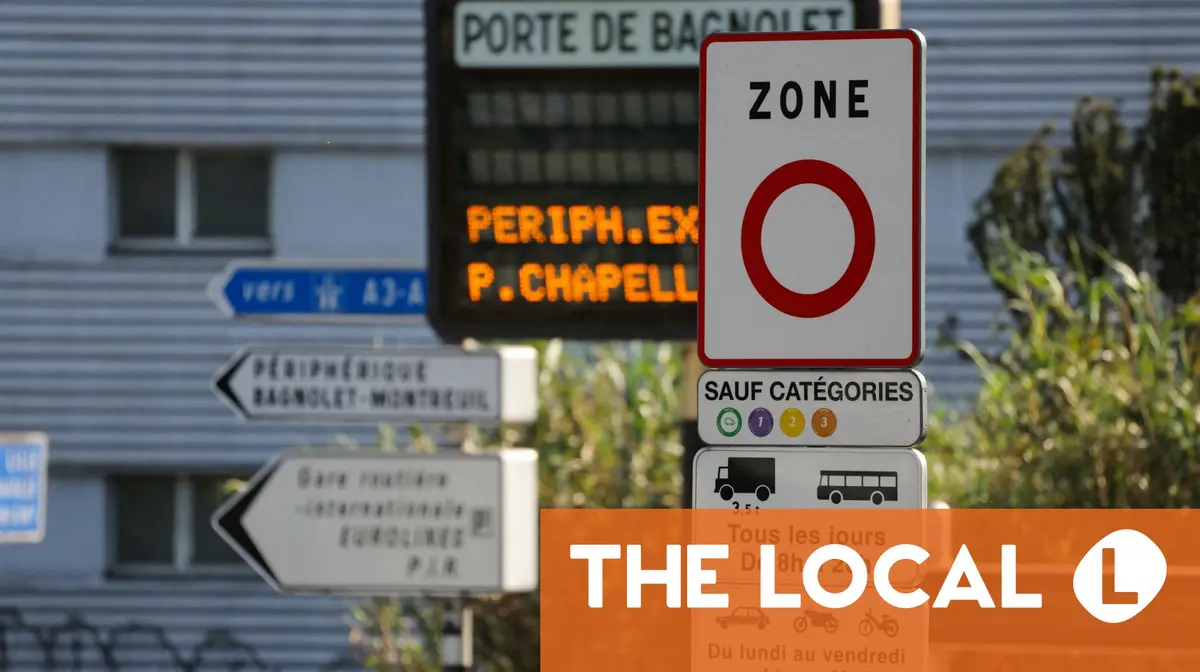
A bill seeking to abolish France’s low-emission zones was blocked by the French Constitutional Council. The zones, known as zones à faibles émissions (ZFEs), restrict certain vehicles from entering designated areas using the Crit’Air sticker system. These zones were introduced in 2019 to limit fine particulate emissions linked to respiratory diseases and premature deaths. The bill had passed parliament in April but was referred to the Conseil Constitutionnel, which ruled against the ZFE provisions. A representative from France Nature Environnement welcomed the decision, citing public health benefits for children, the elderly, and people in precarious circumstances. She also said the zones have reduced air pollution by 30 to 40 percent when properly implemented and criticized claims that the measures are socially unfair.
"The proposal to abolish low-emission zones, or zones à faibles émissions (ZFEs), was introduced through amendments submitted by right-wing and far-right lawmakers to a bill aimed at "simplifying" French laws. It was passed in parliament in April, but the bill was immediately referred to the Conseil Constitutionnel, France's highest authority on constitutional matters and new laws. On Thursday, the Council ruled against the ZFE section of the bill, meaning that the low emission zones - enforced via the Crit'Air sticker system - will remain in place."
"Introduced in France in 2019, these low-emission zones are designed to limit the flow of fine particulate emissions that can cause respiratory diseases and premature deaths by restricting certain vehicles from entering designated areas. Speaking to French broadcasters France Inter and France Culture, Anne Lassman-Trappier, president of the Haute-Savoie branch of France Nature Environnement (FNE), welcomed the decision to maintain the zones. "This is very good news for public health, particularly for the most vulnerable: children, the elderly and people living in precarious circumstances," she said."
"The FNE representative argued that low-emission zones "have proven their effectiveness" in cities where they have been "properly implemented", citing "a 30 to 40 percent reduction in air pollution". Lassman-Trappier also criticised the tone of the public debate in France, saying she was "stunned" by arguments portraying the measures as socially unfair. "On the contrary," she said, these policies are "designed to protect the most vulnerable and fragile people, who often live alongside major roads and are the most exposed to air and vehicle pollution"."
Read at The Local France
Unable to calculate read time
Collection
[
|
...
]