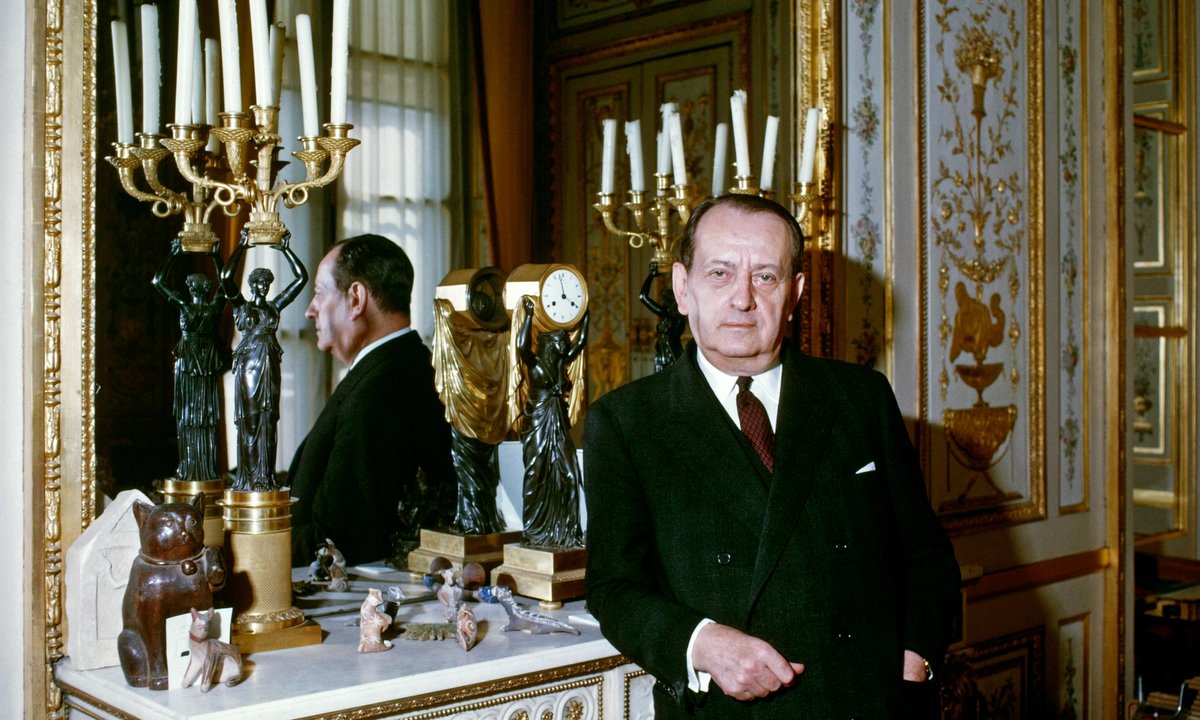
"At the official launch last November, the current culture minister Rachida Dati described the imperative behind the programme as not just celebrating an uncommon visionary but the "burning relevance" of his legacy: "a commitment to continuing to nurture this demanding idea of what culture is"."
"Work he did, though, becoming, after the war, Charles de Gaulle's minister of information and then, from 1958, the first minister of culture. It is to him that the country owes the concept and network of the maisons de la culture and the enshrining in law of cultural heritage protections."
"But as the philosopher Michaël de Saint-Chéron highlights, it is what Malraux did in between those two phases of his life-his anarchist and statesman eras-that has not only sustained his legacy but ensures its continuing relevance."
France is observing the année Malraux, marking the 50th anniversary of André Malraux's death with over 130 cultural events, exhibitions, and publications. Culture Minister Rachida Dati emphasized the program's focus on celebrating Malraux as an uncommon visionary whose legacy remains burningly relevant to contemporary culture. Malraux's name appears throughout French urban landscapes on auditoriums, libraries, schools, and cultural centers. Before World War II, he was a self-taught art historian and surrealist who married wealth. After the war, he served as Charles de Gaulle's minister of information and became France's first minister of culture in 1958, establishing the maisons de la culture network and cultural heritage protections. Philosopher Michaël de Saint-Chéron highlights that Malraux's significance extends beyond his governmental roles to his intermediate period as an anarchist and intellectual.
#andre-malraux #french-cultural-heritage #ministry-of-culture #cultural-legacy #french-intellectual-history
Read at The Art Newspaper - International art news and events
Unable to calculate read time
Collection
[
|
...
]