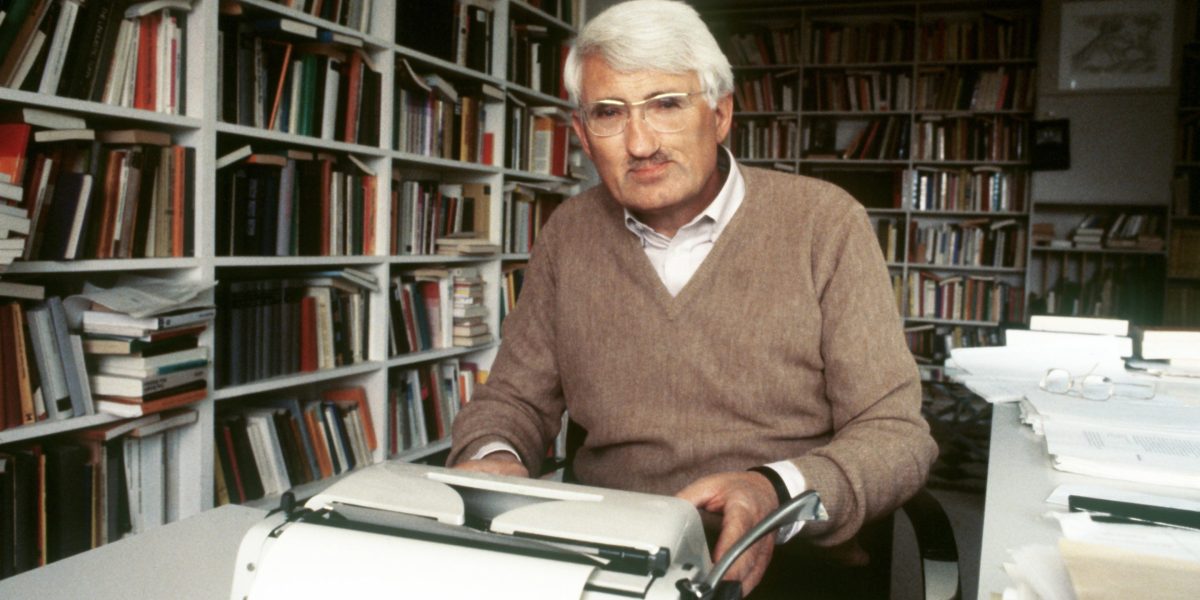
"Habermas frequently weighed in on political matters over several decades. His extensive writing crossed the boundaries of academic and philosophical disciplines, providing a vision of modern society and social interaction. His best-known works included the two-volume "Theory of Communicative Action.""
"Habermas, who was 15 at the time of Nazi Germany's defeat, later recalled the dawn of a new era in 1945 and his coming to terms with the reality of Nazi crimes as something without which he wouldn't have found his way into philosophy and social theory."
"In the 1980s, Habermas was a prominent figure in the so-called Historians' Dispute, in which Berlin historian Ernst Nolte and others called for a new perspective on the Third Reich and German identity. Habermas and other opponents contended that the conservative historians were trying to lessen the magnitude of Nazi crimes through such comparisons."
Jürgen Habermas, one of the world's most influential philosophers, died at age 96 in Starnberg, Germany. His work on communication, rationality, and sociology profoundly shaped modern philosophy and social theory across multiple disciplines. His best-known contribution, the two-volume "Theory of Communicative Action," established frameworks for understanding social interaction. Witnessing Nazi Germany's defeat at age 15 fundamentally shaped his intellectual trajectory toward philosophy and social theory. Throughout his career, Habermas engaged with major political movements and historical debates, including the 1960s student movement and the Historians' Dispute of the 1980s, where he defended the uniqueness of Nazi crimes against attempts to relativize them through historical comparisons.
#philosophy #communicative-action #german-intellectual-history #political-engagement #nazi-germany-legacy
Read at Fortune
Unable to calculate read time
Collection
[
|
...
]