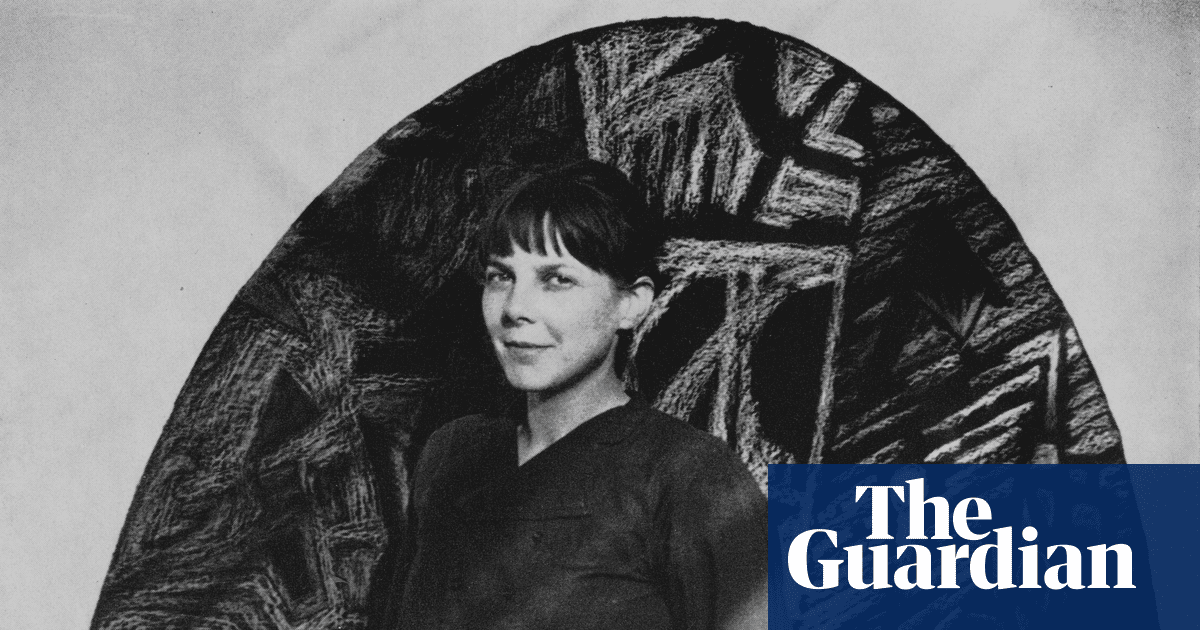
"She was producing these really precise, technical illustrations which were used in medical textbooks, says David Crowley, curator of a new retrospective of Schubert's work at Muzeum Susch, in eastern Switzerland. She was right in the middle of that practice She was totally unfazed about being in dissections. Her anatomical drawings, notes Marika Kuzmicz, the museum's curator, are still published in handbooks for medical students in Croatia today."
"Schubert's dual vocation wasn't unusual for Yugoslav artists, who rarely had access to a commercial art market. But the way these two worlds bled into each other was. The scalpels she used to make clean incisions in cadavers became instruments for slicing canvas, the medical tape meant for wound dressing held her perforated artworks together, and the test tubes typically reserved for laboratory samples became vessels for her autobiography."
Edita Schubert worked for decades at the University of Zagreb's Institute of Anatomy producing meticulous anatomical drawings for surgical textbooks while maintaining a separate studio practice. The tools and materials of dissection and medicine—scalpels, medical tape, test tubes—were repurposed into artworks, slicing canvases, repairing perforated pieces, and carrying autobiographical content. Early work included hyperrealistic still lifes, but frustration with conventional painting led to more radical interventions and material experimentation. Her anatomical illustrations remain in use in Croatian medical handbooks, and her practice exemplifies an overlapping of scientific precision and avant-garde artistic methods.
Read at www.theguardian.com
Unable to calculate read time
Collection
[
|
...
]