"The real prob­lem, as he sees it, is that the slow­ing, if not revers­ing, of the progress of human soci­ety that we've tra­di­tion­al­ly regard­ed as occur­ring in what are com­mon­ly known as the Mid­dle Ages only occurred in Europe. What's more, there have been mul­ti­ple such eras in the world: take the ear­li­er "Greek dark ages" asso­ci­at­ed with the Bronze Age civ­i­liza­tion­al col­lapse of 1177 BC."
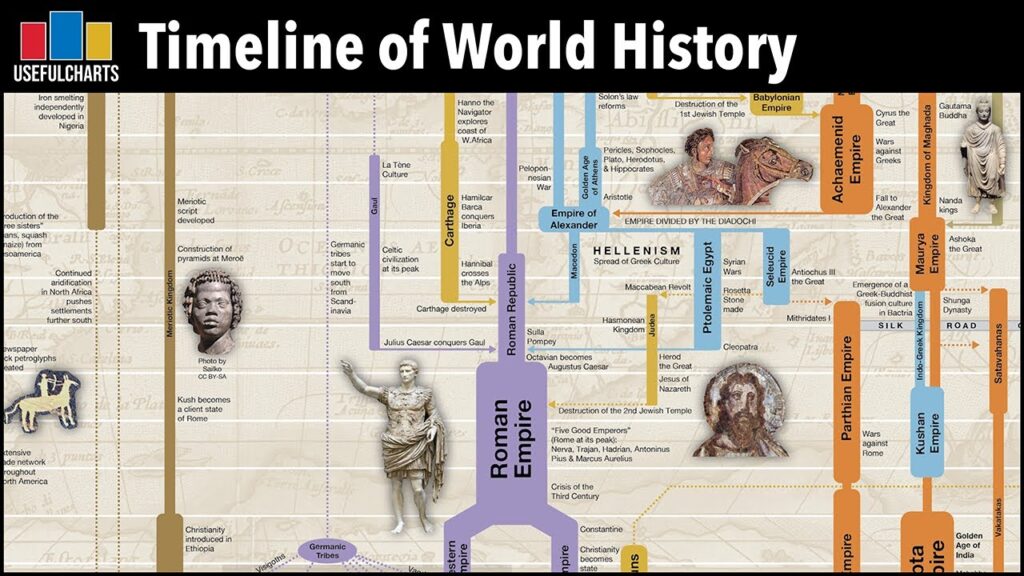
"All this and more comes across at a glance on Bak­er's Time­line of World His­to­ry, whose design is explained in the video. With char­ac­ter­is­tic Use­fulCharts clar­i­ty (also demon­strat­ed by the World Reli­gions Fam­i­ly Tree and the Evo­lu­tion of the Alpha­bet, pre­vi­ous­ly fea­tured here on Open Cul­ture), it lays out all the peri­ods of his­to­ry we may know bet­ter by their names than by their rela­tion­ship to actu­al events."
The slowdown or reversal of social progress traditionally associated with the fifth to late fifteenth centuries occurred primarily in Europe rather than globally. Comparable regional downturns have occurred elsewhere, including the earlier Greek Dark Ages linked to the Bronze Age collapse around 1177 BC. A timeline organizes historical periods by the rise and fall of civilizations, beginning when writing emerged about 5,300 years ago. Multiple civilizations had already been established worldwide by that point. Line thickness on the timeline represents the growth, endurance, and decline of societies across regions.
Read at Open Culture
Unable to calculate read time
Collection
[
|
...
]