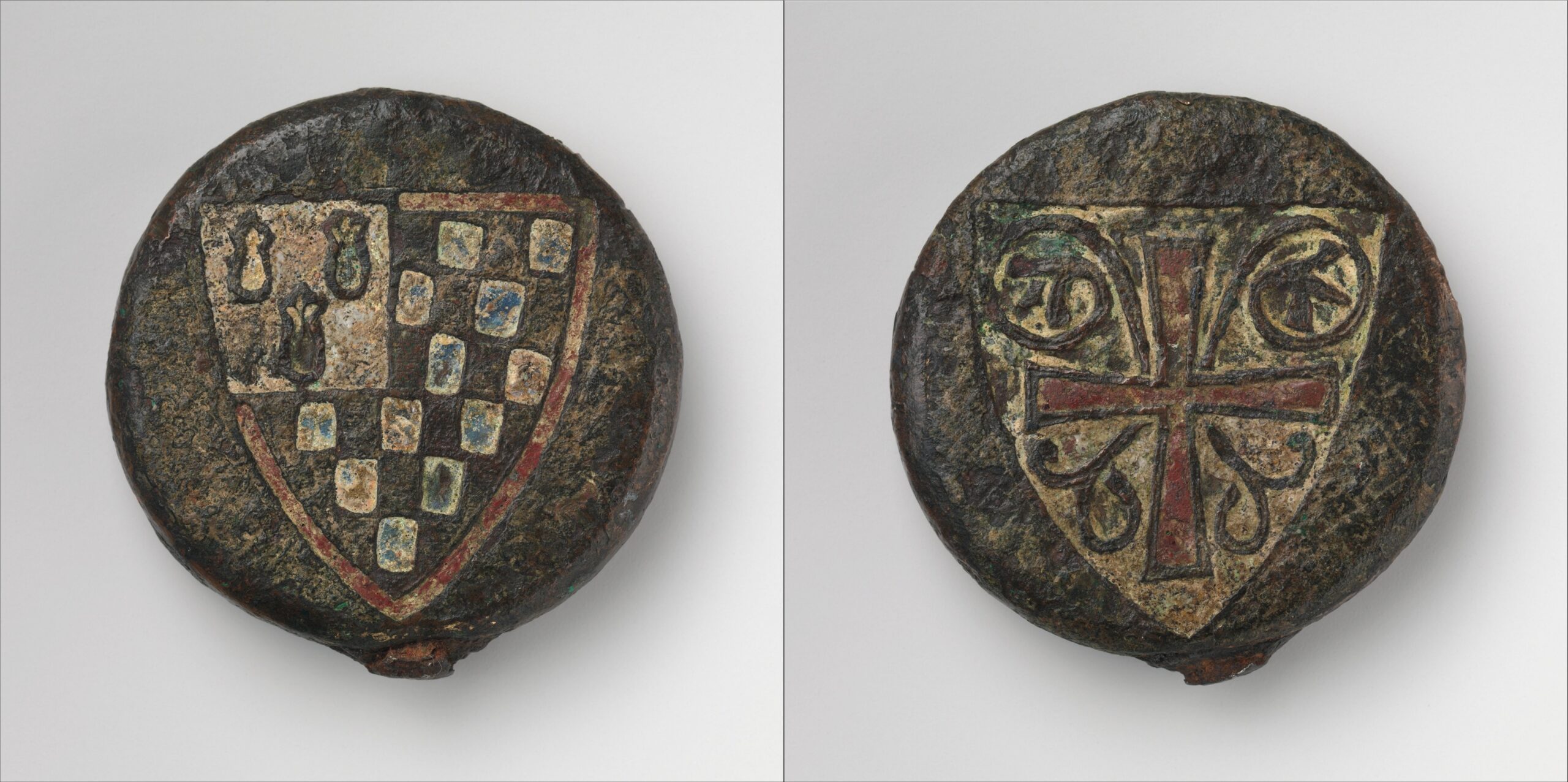
"The mystery of the lost crusader sword begins, peculiarly enough, with Louis J. Cartier - of Cartier jewellery house fame - in the Damascus bazaar in the late 1920s. While rummaging through the historic wares on sale, he found a weighty metal disc made of copper. As he turned the object over in his hands, he noticed the fine gold and enamel decorations: a shield with a coat of arms on one side and a Christian motif - a red cross - on the other."
"After being captured in Egypt during the Seventh Crusade (1248-54), Peter of Dreux's sword disappeared. It was lost for nearly seven hundred years until the late 1920s, when its pommel was rediscovered in the Damascus bazaar by Louis J. Cartier - of House of Cartier fame - who purchased it and gifted it to The Met. This invaluable relic - one of the most remarkable personal objects to survive from the crusades - offers a fascinating window into the life and military campaigns"
Peter of Dreux's sword pommel disappeared after his capture in Egypt during the Seventh Crusade and remained lost for nearly seven hundred years. Louis J. Cartier rediscovered the pommel in the Damascus bazaar in the late 1920s, recognized its gold and enamel decoration, and purchased it. Cartier gifted the pommel to The Metropolitan Museum of Art in 1938 as a symbol of friendship between France and the United States. The pommel dates to c.1240–50 and bears a coat of arms and Christian motifs that enable association with a named crusader and specific military events, providing rare personal insight into crusader material culture.
Read at Medievalists.net
Unable to calculate read time
Collection
[
|
...
]