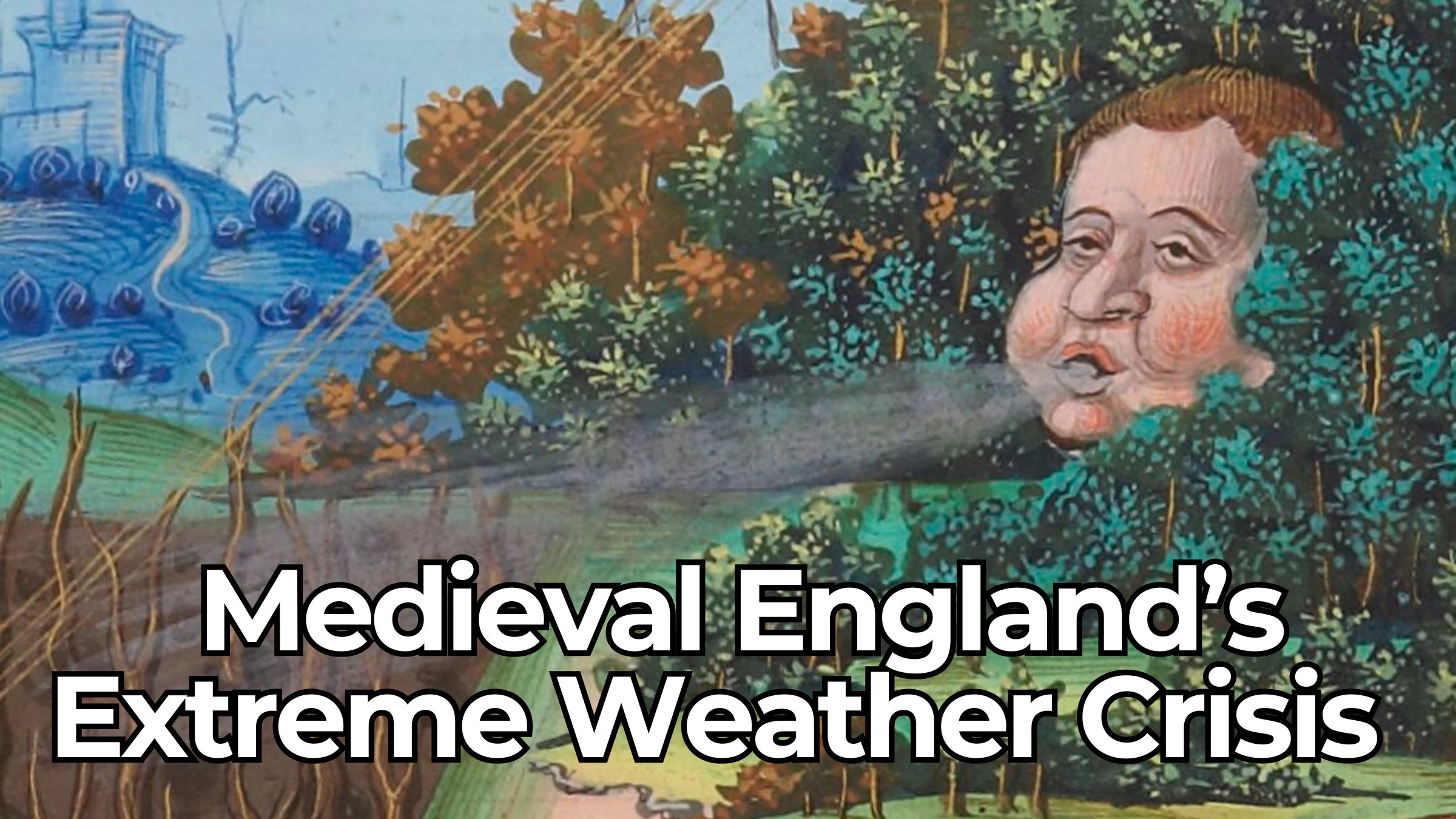
The 1430s brought exceptionally severe winters and increasing wet conditions across England, including long frosts and widespread freezing of rivers and lakes. Shortened growing seasons reduced harvest yields, while later heavy rainfall damaged crops across much of the country. Poor harvests in 1437, 1438, and 1439 drove grain prices upward and produced widespread shortages, with towns experiencing the sharpest impacts. Chroniclers reported extreme scarcity, including bread made from fern roots in northern areas. Economic turmoil linked to these climate shocks marked the start of the Great Slump, a prolonged depression lasting into the mid-fifteenth century, and transformed medieval countryside landholding patterns.
"The 1430s brought some of the coldest winters of the fifteenth century. Scientific reconstructions indicate that winters in 1431-32, 1432-33, 1434-35, and 1436-37 were exceptionally severe, with rivers and lakes freezing across parts of Europe. Medieval chroniclers recorded long frosts in England and Ireland, while new climate models suggest the weather was also becoming wetter, bringing flooding and storms."
"The effects were devastating for agriculture. Shortened growing seasons reduced harvest yields, while heavy rainfall in the later 1430s damaged crops across much of England. Bailey notes that the years 1437, 1438, and 1439 saw especially poor harvests, leading to soaring grain prices and widespread shortages."
"“There was certainly dearth in England,” Bailey writes, “for example, the Stow chronicler commented that grain was so scarce in 1439 in the north that the poor made bread out of fern roots. Grain shortages were felt most acutely in towns, forcing the authoritie"
Read at Medievalists.net
Unable to calculate read time
Collection
[
|
...
]