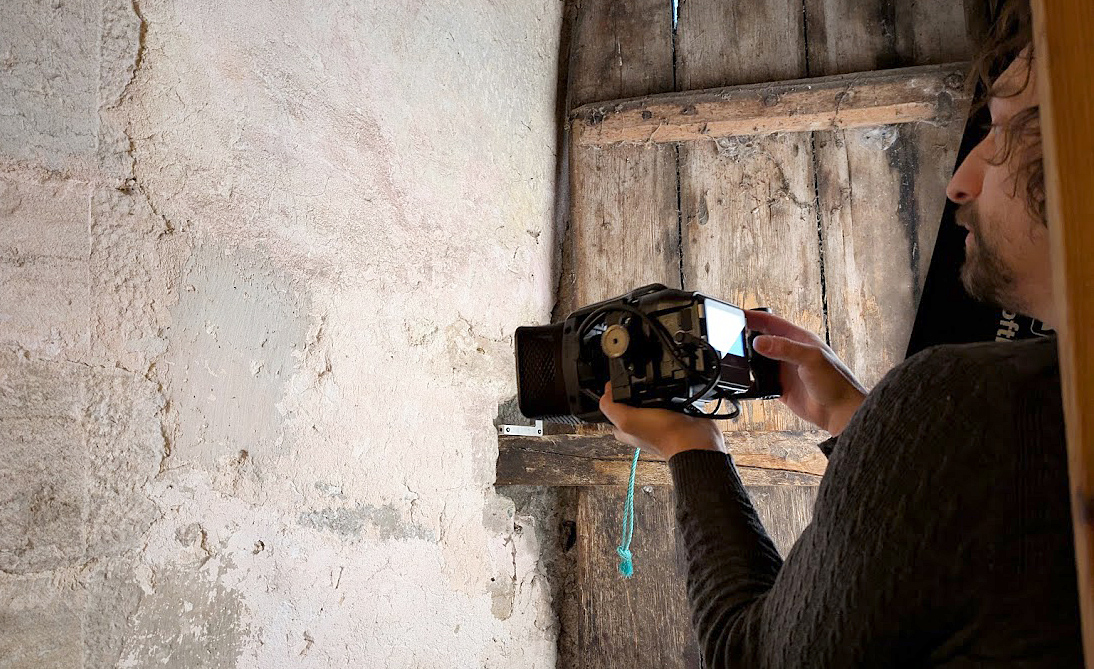
A team from Gotland Museum and the Swedish National Heritage Board uses photogrammetry to capture hundreds of runic inscriptions carved into lime plaster on medieval church walls across Gotland. The inscriptions date from the 12th through the late 16th centuries and include names, records of community matters such as which farmers contributed to a church, disputes and land-rights claims, and devotional texts like Ave Maria and Pater noster in Latin or Old German. Many carvings are extremely thin and sometimes over-plastered yet survive in older layers. Historical 19th-century drawings by Per Arvid Säve continue to guide investigations, while photogrammetric 3D models preserve details as surfaces deteriorate and reveal inscriptions hidden beneath later layers.
"A new project on the Swedish island of Gotland is using photogrammetry to record hundreds of runic inscriptions carved into the plaster walls of medieval churches-creating detailed 3D models that researchers can study long after the fragile surfaces have begun to deteriorate. The work is being carried out by a team from Gotland Museum and the Swedish National Heritage Board. At Närs Church in southeast Gotland, researchers photographed wall sections under carefully angled lighting to capture extremely thin carvings cut into lime plaster-some visible on the surface, others surviving beneath later layers of plaster."
"The inscriptions date from the 12th century through the late 16th century. While some are simple name carvings, others record practical matters connected to local communities-such as which farmers contributed to a church-or reflect disputes and claims, including "who has the right to travel over the land." Devotional texts also appear frequently. "Very often these are prayers such as Ave Maria or Pater noster written down in Latin or Old German," Åhfeldt adds."
"Many of Gotland's plaster inscriptions have been known for generations. In the 19th century, Per Arvid Säve travelled across the island recording runic inscriptions, and his drawings still help guide modern investigations. Researchers say some inscriptions remain intact but were later hidden behind church furnishings, while others have been lost. New finds are also common, particularly near places where inscriptions were previously recorded."
Read at Medievalists.net
Unable to calculate read time
Collection
[
|
...
]