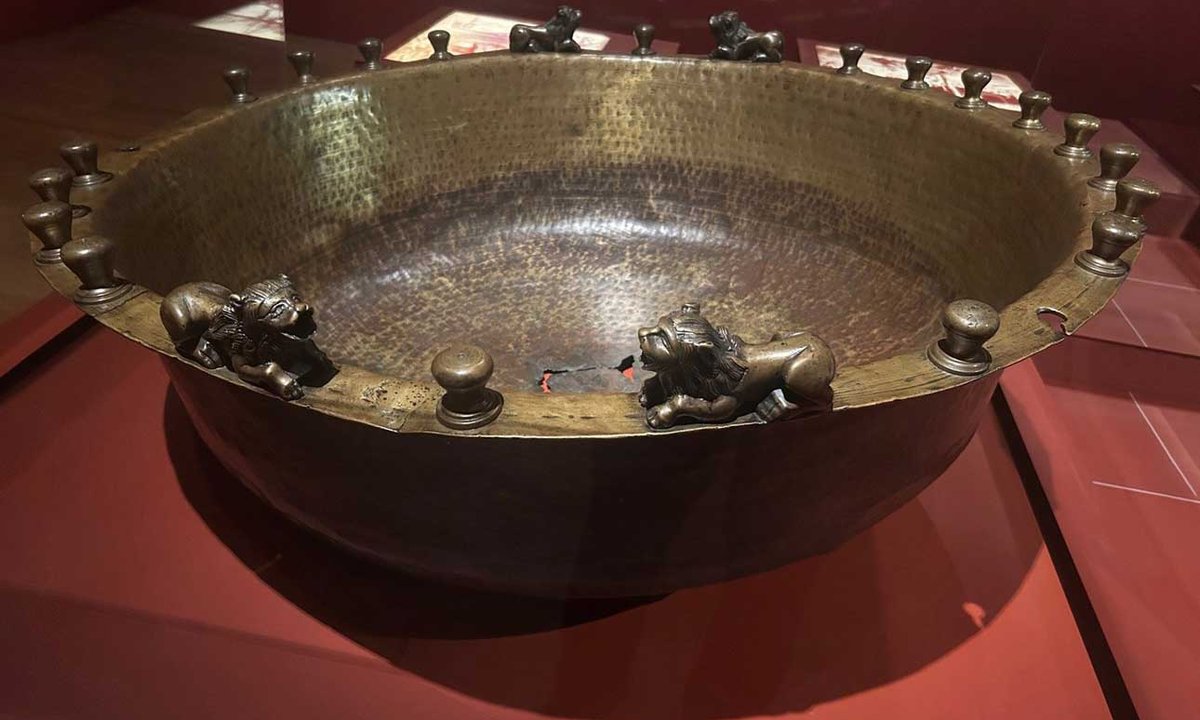
"The Aya Kese, a ceremonial basin, was said by Europeans to have been used to hold the blood of human sacrifices, looted by British troops in 1896."
"Curators believe the basin was made in England, Germany, or the Netherlands and most likely dates from the 16th century, reaching the Asante kingdom by the early 18th century."
"The Asante king, Prempeh I, wrote in 1930 that the Aya Kese had originally descended from heaven on a gold chain, after a great thunderstorm."
"In 1817, British visitor Thomas Bowditch described the Aya Kese in the royal mausoleum complex, noting its size and the presence of four small lions."
The Aya Kese, a large brass basin with lion figures, was looted by British troops in 1896 in Ghana. It is currently displayed at the British Museum. Curators suggest it was made in England, Germany, or the Netherlands, likely in the 16th century. By the 18th century, it became a sacred object in the Asante kingdom. The basin features a rim with knobs and four sculpted lions, which complicate its dating. Historical accounts indicate it may have arrived via a trading ship rather than a divine origin.
Read at The Art Newspaper - International art news and events
Unable to calculate read time
Collection
[
|
...
]