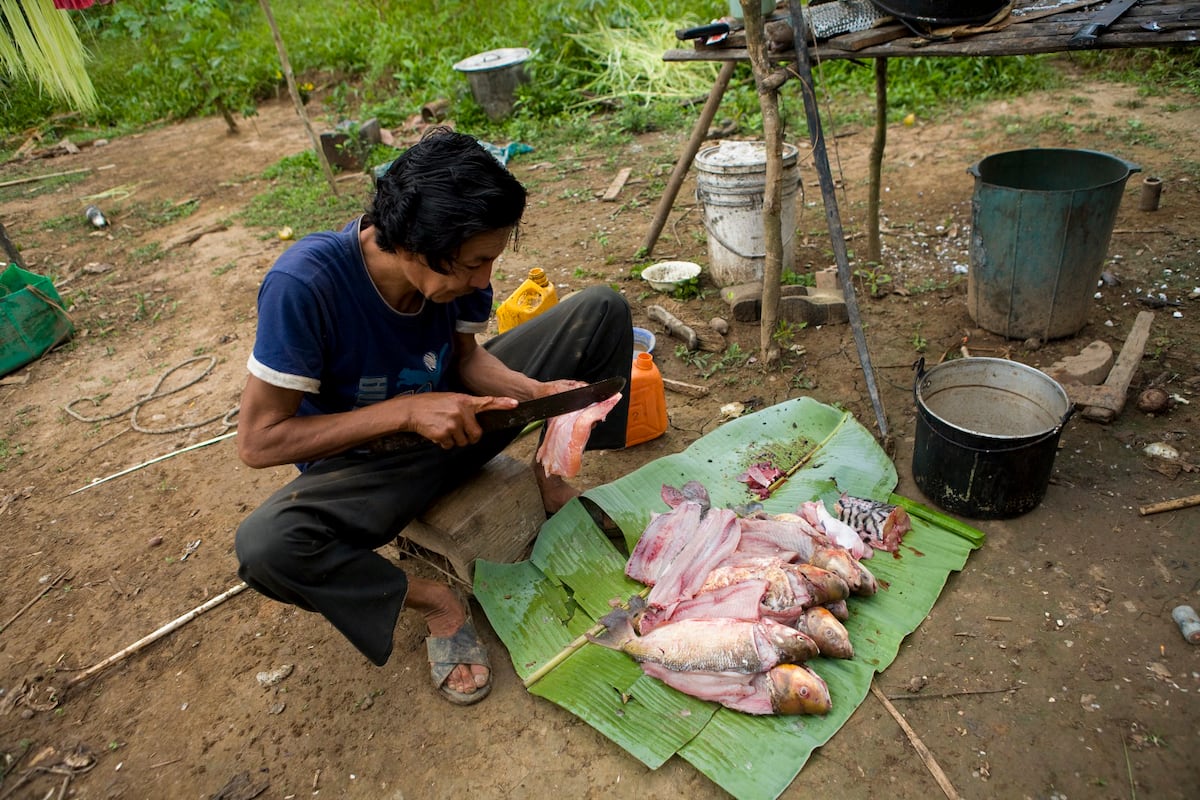
The Yuracare refused integration with Bolivia's colonial system and settled on the border between mountain foothills and plains. There is no evidence of contact between the Yuracare and the Incas. Evangelizing missions during the Spanish viceroyalty made few inroads with the Yuracare. Quechua and Aymara migrants arrived beginning in the second half of the 20th century to practice agriculture. A Yuracare-Spanish dictionary published after a quarter-century of work contains more than 6,000 entries and offers the most complete grammatical decoding of the language. The dictionary was developed by two European researchers alongside Yuracare community members.
"At least, that is how it is being presented by its creators: French anthropologist Vincent Hintzel and Dutch ethnolinguist Rik van Gijn, who met while carrying out their post-graduate studies in the tropical regions of Bolivia. They were joined by Geronimo Ballivian Asencio Chavez, Alina Flores and Rufino Yabeta, four members of the 6,500-person Yuracare community, according to a 2024 census."
"Ballivian is 77 years old, which is within the average age range of the majority of those who speak Yuracare today. He spends his time working as a carpenter, mechanic, woodworker, architect and language teacher. He lives in the tropical Cochabamba region, one of the Bolivian departments, along with Beni, that form the traditional lands of his people. I am very happy with the dictionary, it is a gift from God, he says."
Read at english.elpais.com
Unable to calculate read time
Collection
[
|
...
]