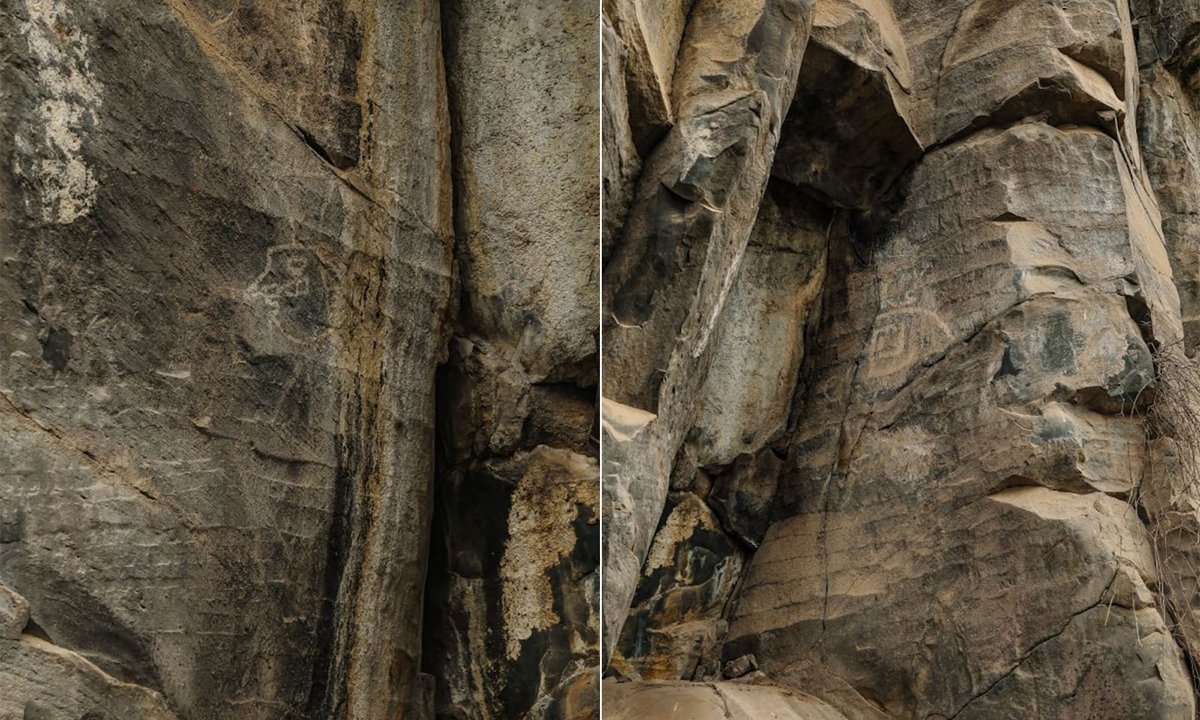
"The discovery comes on the heels of other recent discoveries of Mesoamerican and colonial-era sites and artefacts during archaeological salvage work associated with planning a new 232km passenger rail line between Mexico City and Querétaro."
"The location of the artwork suggests a mythical-religious purpose, perhaps related to astronomical or calendrical phenomena."
"The figures found in what INAH describes as a rock shelter are striking. They include one carrying what appears to be a macana with a headdress and goggles reminiscent of Tláloc."
Specialists from Mexico's INAH recorded 16 petroglyphs and cave paintings near the Tula River and La Requena Dam. These artworks date from prehistory to the Mesoamerican Postclassic period. The discovery coincides with archaeological work for a new rail line. A nearby 1,000-year-old Toltec altar was also found. The site, known as El Venado, was registered in the 1970s. The artwork suggests a mythical-religious purpose, possibly linked to astronomical phenomena. The figures include a character with a macana and a headdress resembling the Aztec god Tláloc.
Read at The Art Newspaper - International art news and events
Unable to calculate read time
Collection
[
|
...
]