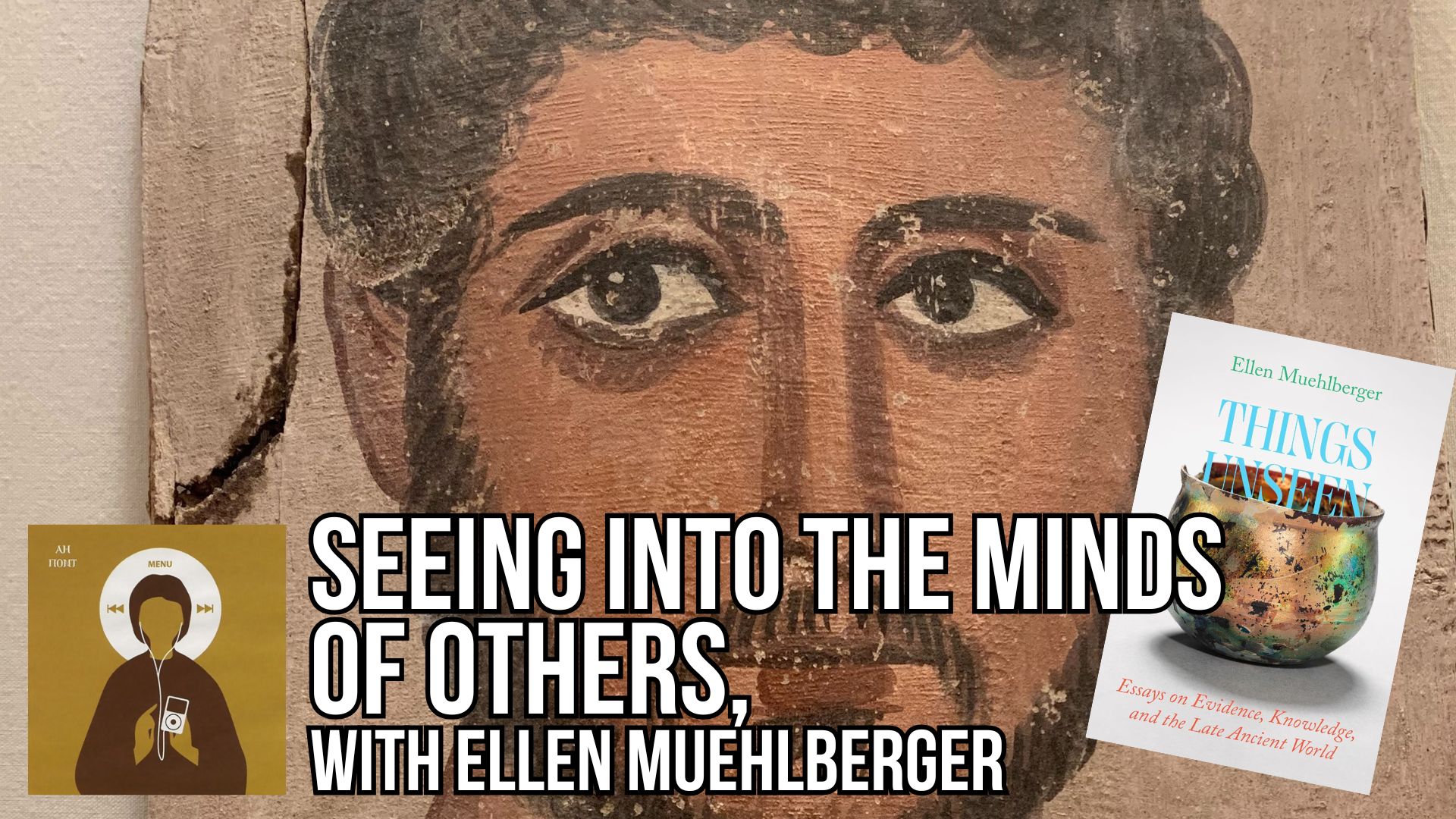
"A conversation with Ellen Muehlberger about how some people in late antiquity tried to model, confirm, or interpret what they thought was going on in the minds of others."
"We briefly talk about the genre of the lecture book, and then about classroom exercises in impersonation (were they exercises in empathy or not?) and breaking into houses to see what people had in their private quarters."
"The conversation is based on Ellen's recent book Things Unseen: Essays on Evidence, Knowledge, and the Late Ancient World (University of California Press, 2025)."
Some people in late antiquity developed techniques to model, confirm, and interpret what they believed was occurring in others' minds. Lecture books provided structured frameworks for classroom activity and thought experiments. Classroom exercises included impersonation, which could function as rehearsals for social roles or attempts at empathy. Other practices involved covertly entering private homes to inspect personal quarters and possessions as evidence of beliefs and behaviors. These activities treated private spaces and simulated social performance as sources of knowledge. Such methods reveal concerns about evidence, privacy, and epistemic authority in late ancient societies.
Read at Medievalists.net
Unable to calculate read time
Collection
[
|
...
]