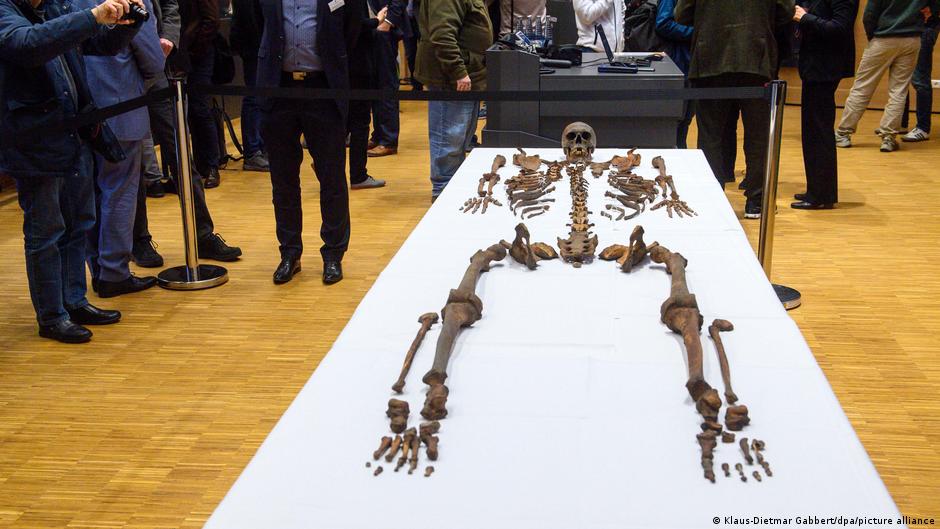
"With a probability bordering on certainty what we have here in front of us are indeed the mortal remains of Otto the Great. The bones belonged to a man who died at roughly 60 years of age, analysis points to a very well-fed man for the era, a member of the elite, muscular structures point to a man who regularly rode horses in a saddle, and signs of past injuries indicate a man with an active lifestyle and probably combat experience."
"Genetically, it also fits perfectly. DNA evidence confirmed the skeleton was a blood relative of Heinrich II, the last Holy Roman Emperor of the Ottonian dynasty, a grandson of one of Otto's brothers. Heinrich II's remains are in Bamberg in Bavaria, providing comparative genetic material that strengthens the authentication of these remains."
A skeleton discovered in a wooden coffin within the official sarcophagus of Otto I of Saxony in Magdeburg Cathedral has been identified with near certainty as belonging to the 10th century king himself. Multiple lines of evidence support this conclusion: the bones belonged to a man who died around age 60, showed signs of elite status and excellent nutrition for the era, displayed muscular structures consistent with regular horseback riding, and bore marks of past injuries suggesting an active lifestyle with combat experience. DNA analysis confirmed the skeleton was a blood relative of Heinrich II, the last Holy Roman Emperor of the Ottonian dynasty and grandson of one of Otto's brothers. Anthropologists presented this comprehensive case for authenticity at Magdeburg University Hospital.
#otto-i-of-saxony #archaeological-authentication #medieval-remains #dna-analysis #magdeburg-cathedral
Read at www.dw.com
Unable to calculate read time
Collection
[
|
...
]