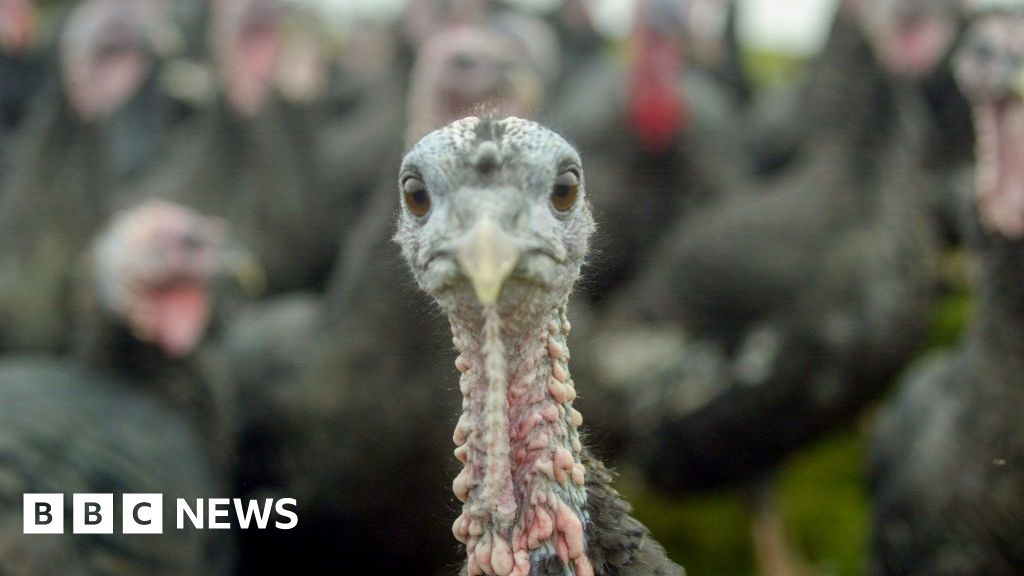
"Long before Christmas turkeys arrived shrink-wrapped in the shops, they walked to market on their own two feet. First introduced to England in the 1500s, the birds gradually gained in popularity to become a must on the dinner tables of London's wealthy. But before the advent of refrigeration and the railways, getting turkeys from Norfolk and Suffolk farms to the capital involved a long walk for the birds."
"In a practice known as turkey droving, thousands of birds, some wearing tiny leather boots, were herded through fields and along rough roads on a three-month journey. At the heart of this tradition was one of Britain's oldest breeds, the Norfolk Black, which was nearly lost to history until one farming family stepped in to save it. Pat Graham Pat Graham's family, the Peeles, have been farming turkeys since the 1800s when demand grew among wealthy Victorian families."
"The 84-year-old amateur historian recounts how the birds were walked to markets in Attleborough and Aylsham in Norfolk, to be sold to merchants who had travelled from London. Once selected, the birds then set off with a "drover", covering about three miles each day. They arrived at the start of December at Smithfield Common in the City of London, where they were rested and fattened up for Christmas."
Turkeys arrived in England in the 1500s and became a luxury on wealthy London tables. Before refrigeration and railways, birds from Norfolk and Suffolk walked to the capital in three-month droves. Thousands, sometimes wearing tiny leather boots or with feet tarred and sanded, were herded through fields and along rough roads, covering about three miles a day. Drovers foraged berries, acorns and gleaned corn to feed flocks that roosted in trees at night. Flocks of up to 1,000 travelled to Attleborough and Aylsham markets before arriving at Smithfield Common to be rested and fattened for Christmas. The Norfolk Black breed was nearly lost until one farming family preserved it.
Read at www.bbc.com
Unable to calculate read time
Collection
[
|
...
]