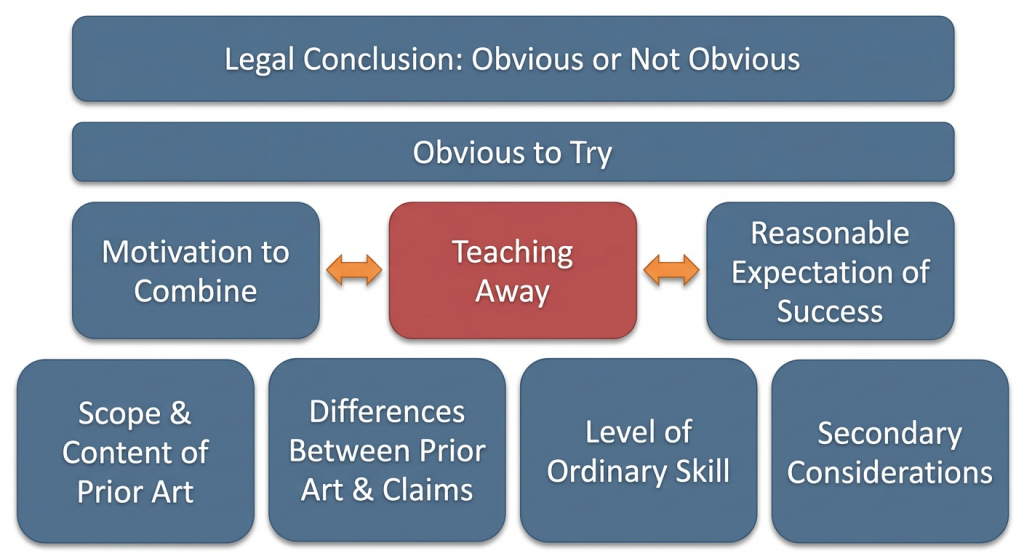
The Supreme Court's decision in Graham v. John Deere established four factors for evaluating obviousness in patent law: prior art scope, differences from claims, ordinary skill level, and secondary considerations. Despite these guidelines, the transition from evidence to legal conclusion remains unclear. The original case highlighted that even with comprehensive prior art analysis, determining obviousness requires an inferential leap that the established factors do not adequately address, indicating a gap in the analytical framework.
"The four factors have governed every obviousness determination for nearly sixty years. According to Graham, the next step after considering those factors is to make the final determination. Is the invention obvious or not."
"The factors tell you what evidence to gather. They do not tell you how to get from that evidence to the legal conclusion."
"Graham itself involved the combination of a host of prior art. The lower courts found that the prior art 'as a whole in one form or another contains all of the mechanical elements' of the patent at issue."
"Yet the four factors alone did not resolve the question. The Court still had to make an inferential leap: given all of this, would a person of ordinary skill have found the claimed rearrangement of shank and hinge plate obvious?"
Read at Patently-O
Unable to calculate read time
Collection
[
|
...
]