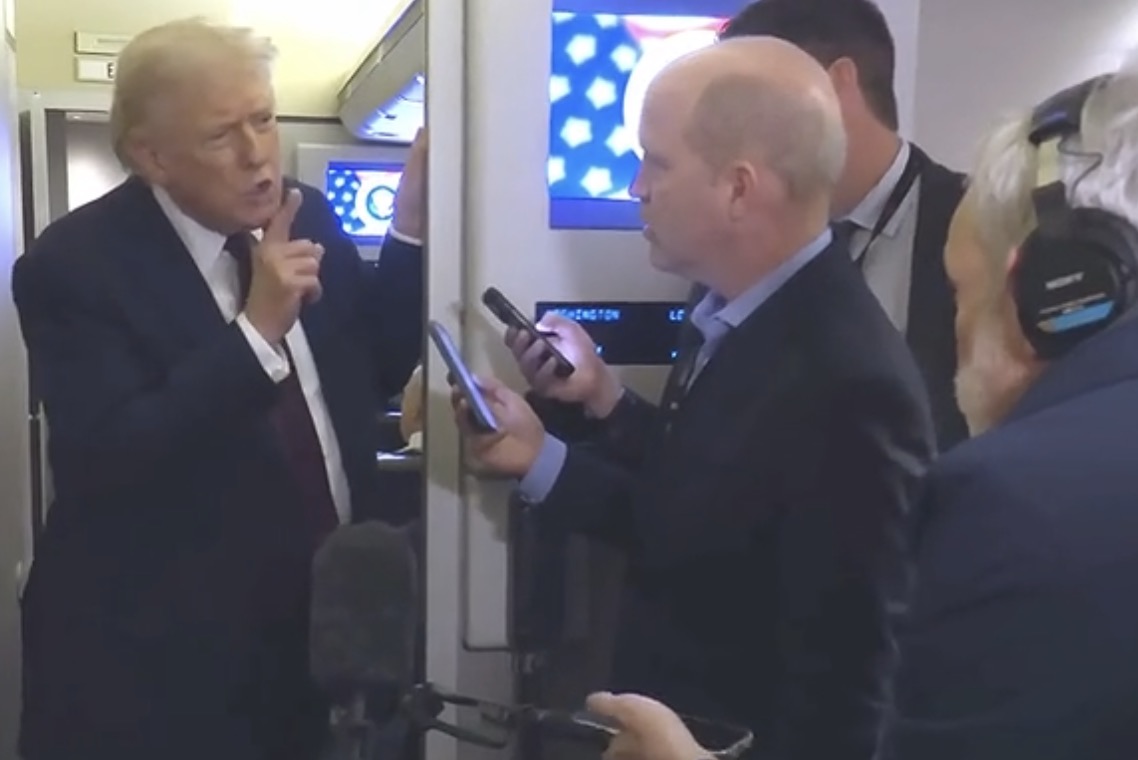
"A wartime administration is actively testing the limits of the First Amendment. The problem isn't that the press missed it. It's that the press keeps getting in its own way. Call it main character syndrome: the instinct to center journalism's performance in the story rather than examine how that performance interacts with power."
"The shush that launched a thousand takes was tailor-made for it—a clear villain, a steady protagonist, a visual that travels, and a narrative that resolves with professional vindication inside a single news cycle. It is the story the press is most comfortable telling about itself. It is also, in this case, the story that most benefits Trump."
"The narrative tracks the exchange beat by beat—who asked what, how Trump responded, how the reporter held her ground—and resolves with professional vindication. It is compelling, clear, and complete on its own terms. What it leaves largely untouched is the broader context in which that moment sits."
The American press has focused extensively on covering its own resistance to the Trump administration, particularly following an incident where Trump gestured for silence to reporter Mariam Khan. While Khan's persistence was widely praised as exemplary journalism, this narrative-driven coverage obscures a critical problem: the press centers its own performance rather than analyzing how that performance functions within power dynamics. The media's tendency toward self-vindication through single news cycles creates compelling but incomplete stories that ultimately benefit the administration's interests. The press's instinct to frame itself as the protagonist in democracy's defense prevents deeper examination of how its coverage patterns interact with and potentially amplify authoritarian pressure tactics.
#press-criticism #trump-administration #media-self-coverage #first-amendment #journalism-accountability
Read at www.mediaite.com
Unable to calculate read time
Collection
[
|
...
]