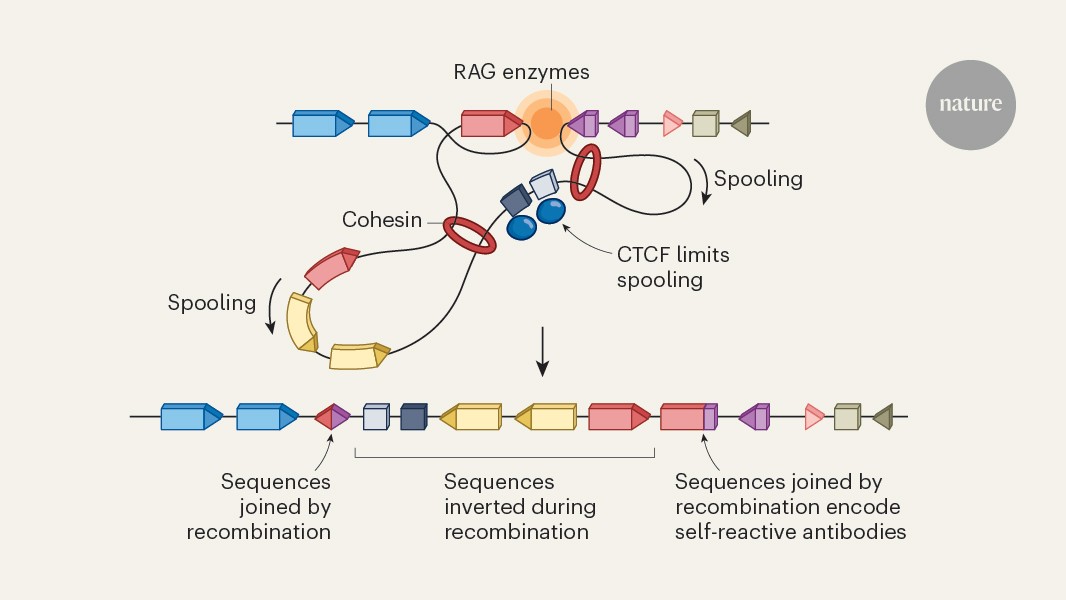
The immune system generates millions of distinct antibodies each day to fight infections. Antibodies must recognize foreign disease-causing agents rather than the body’s own tissues. B cells achieve this by changing antibody-encoding DNA sequences. These rearrangements produce a diverse range of antibody genes. At the same time, the process prevents formation of genes that would encode antibodies reacting with self tissues. The result is broad antibody diversity paired with self-tolerance, reducing the risk of autoimmunity while maintaining effective defense against pathogens.
"The body's ability to fight infections successfully relies on the generation of millions of distinct antibodies every day. But what ensures that these antibodies target only foreign disease-causing agents and not the body's own tissues? Writing in Nature, Li et al. describe changes in antibody-encoding DNA sequences that ensure a diverse range of antibodies are generated while simultaneously preventing the formation of genes that encode self-reacting antibodies."
"DNA rearrangements in immune-system B cells generate diverse antibody-encoding genes and help to avoid producing antibodies that target the body's own tissues."
Read at Nature
Unable to calculate read time
Collection
[
|
...
]