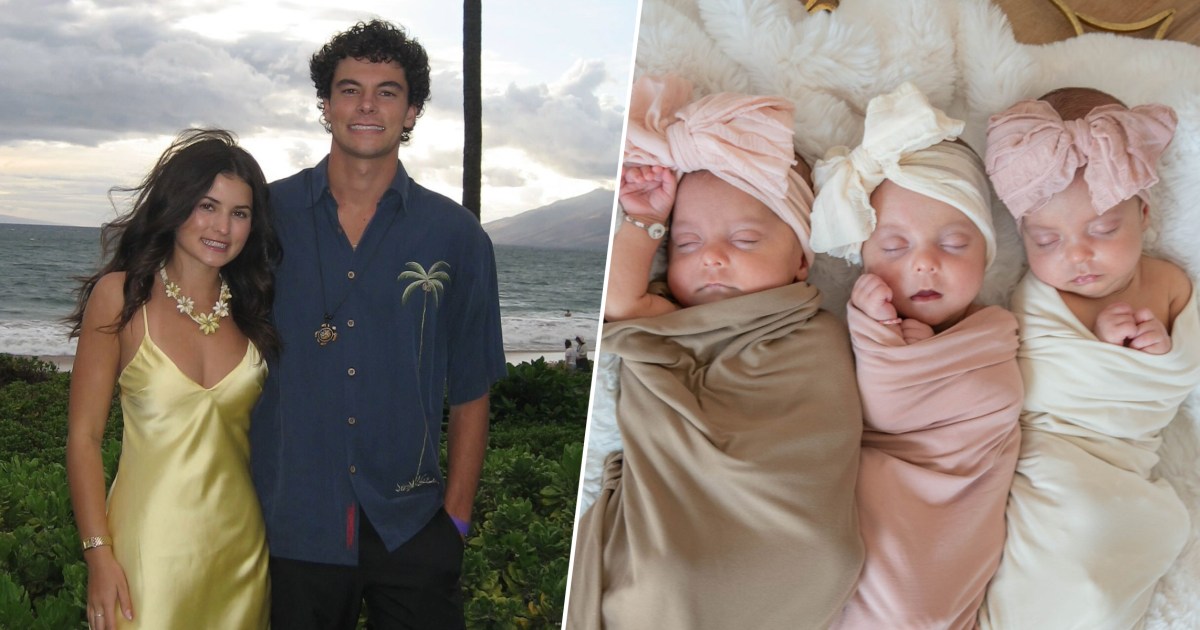
A 20-year-old first-time mother experienced severe vomiting and returned to the hospital convinced something was wrong. An ultrasound revealed three heartbeats, indicating triplet pregnancy. The pregnancy was exceptionally rare: spontaneous monochorionic triamniotic triplets, meaning three identical fetuses sharing one placenta. A single placenta may not evenly meet the oxygen, nutritional, and metabolic needs of all three babies, increasing risks such as fetal growth restriction, twin-to-twin transfusion, stillbirth, and extremely preterm delivery. With close monitoring during the third trimester, the mother delivered three daughters by Cesarean section at 32 weeks and two days. The infants weighed under four pounds each and required about six weeks in the neonatal intensive care unit for breathing support, feeding assistance, and temperature regulation.
"“A single placenta is often unable to evenly support the oxygen, nutritional, and metabolic demands of all three babies,” Daneshmand says, noting the condition carried heightened risks of fetal growth restriction, twin-to-twin transfusion - a potentially life-threatening complication in which blood flow between the babies becomes unbalanced - stillbirth and extremely preterm delivery."
"“We were in shock,” she says. According to Dr. Sean Daneshmand, medical director of maternal-fetal medicine at Scripps Clinic and Toney's physician, the pregnancy was exceptionally rare: spontaneous monochorionic triamniotic triplets, meaning three identical babies sharing one placenta."
"With Daneshmand monitoring the high-risk pregnancy throughout her third trimester, Toney delivered three daughters by Cesarean section on Jan. 29, at 32 weeks and two days gestation. The girls, each weighing under 4 pounds, spent about six weeks in the neonatal intensive care unit at Scripps La Jolla, which is operated in partnership with Rady Children's Hospital-San Diego, where they received breathing support, feeding assistance and help regulating body temperature."
"Toney already knew she was pregnant. But an ultrasound soon revealed why her symptoms had become so severe. There were three heartbeats. Toney remembers she and and her fiancé, Blake Hertz, 22, staring at each other as doctors explained what they were seeing on the screen."
#triplets #high-risk-pregnancy #monochorionic-triamniotic #neonatal-intensive-care #twin-to-twin-transfusion
Read at TODAY.com
Unable to calculate read time
Collection
[
|
...
]