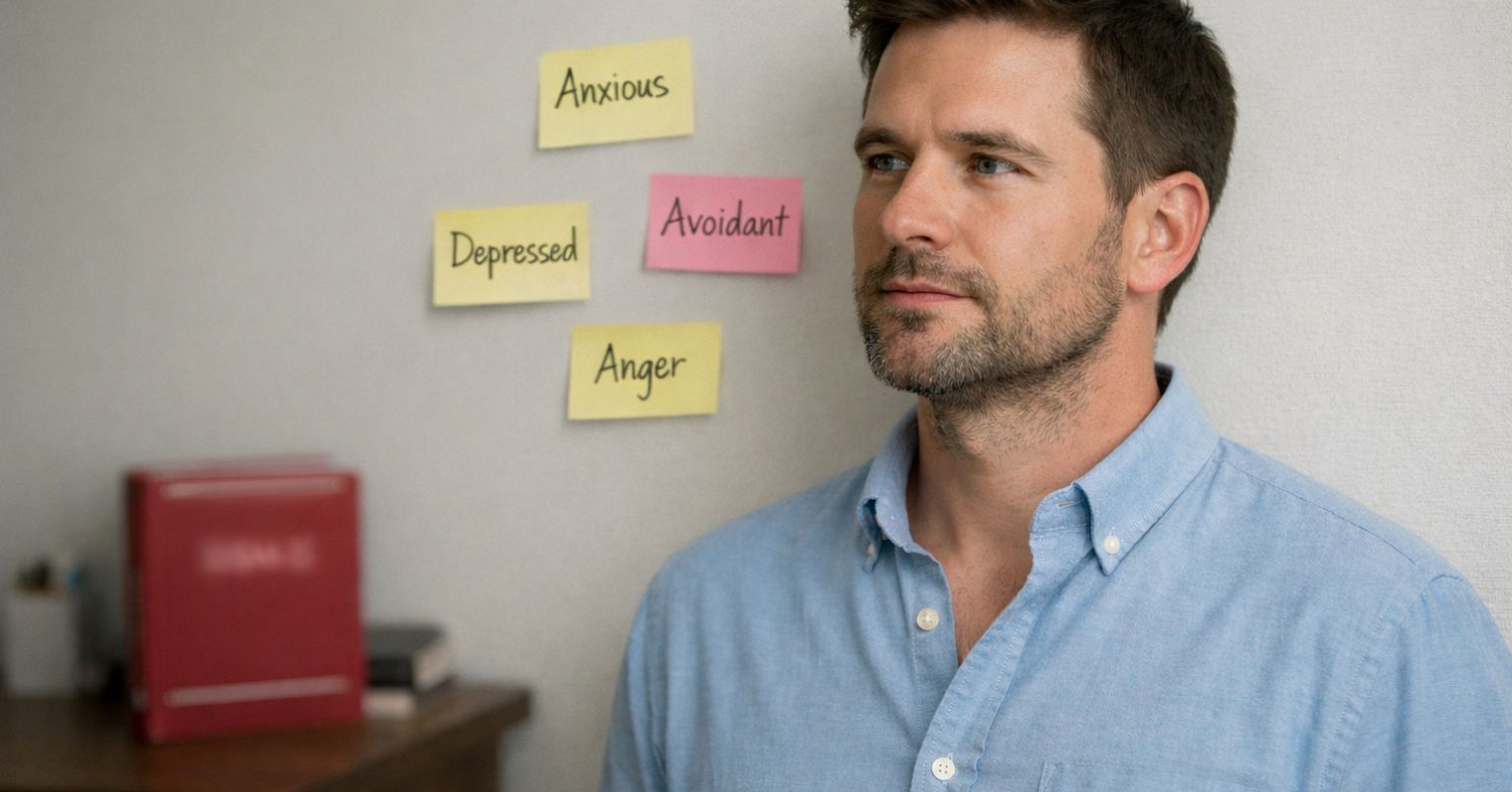
Diagnostic labels can reduce shame by naming patterns of thoughts, feelings, and behaviors and can make treatment accessible through insurance and clinical systems. Labels explain recurring experiences and can validate distress, allowing people to feel understood rather than defective. However, labels can also calcify into identity, producing resignation and limiting perceived capacity for change. When diagnosis becomes destiny, curiosity and motivation for development decline and growth narrows. Diagnosis should increase understanding and responsibility rather than provide excuses. Attention to both the benefits and the risks of labeling supports treatment access while preserving room for personal change.
"A man once sat across from me and said, "I'm just an anxious person. That's how I am." He didn't say it defensively. He said it with resignation. The diagnosis had helped him at first. It gave language to his racing thoughts, his restless sleep, his nonstop scanning of the room for what might go wrong. For the first time, he didn't feel defective. He felt understood."
"What began as an explanation slowly became identity. "I can't do that, I'm anxious." "I don't handle conflict well, and I have anxiety." "That's just how my brain works." The diagnosis, which once offered relief, began to confine what he believed he could change. This is the paradox of modern mental health language. Diagnosis can illuminate patterns. It can reduce shame. It can open access to treatment. It can help people feel less alone. But when diagnosis becomes destiny, growth narrows."
"To be clear, diagnosis serves an important function. The psychological world before diagnostic language was often cruel. People were blamed for what they did not understand. Conditions were moralized instead of contextualized. Naming patterns reduced unnecessary shame and brought structure to suffering. It also serves a practical function. In modern health care systems, diagnosis is how treatment is funded. Insurance companies require a diagnostic code in order to authorize payment. Without a DSM-5 diagnosis, many people could not access therapy at all."
Read at Psychology Today
Unable to calculate read time
Collection
[
|
...
]