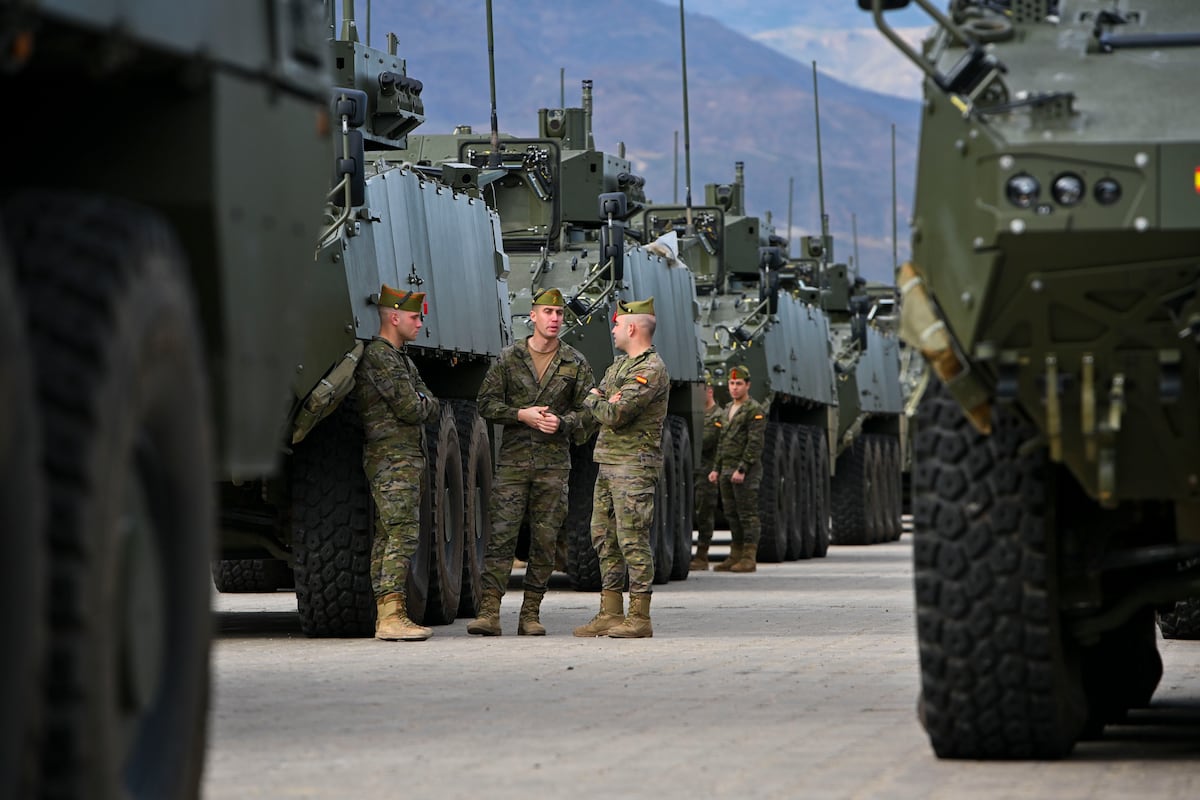
"The idea of a European army has been floating around the EU for years decades without ever taking shape. But as the United States pulls away from Europe under President Donald Trump, despite the danger posed by Vladimir Putin's Russia, the dynamics are shifting. The Greenland crisis has created an unusual consensus among European partners on the urgency of strengthening defensive autonomy, a situation that is reviving calls for a European military force outside the NATO framework."
"Doubts, however, remain. Trump's annexationist ambitions for the Arctic island were a turning point. This past January, at the height of the crisis, the European commissioner for defense, Andrius Kubilius, revived the idea of a European military force of 100,000 soldiers, capable of replacing the current U.S. presence on European soil. Without openly advocating for a common army many agree that what matters is not the name but having a more or less robust European defensive contingent"
U.S. divergence under President Trump and heightened concerns about Russia prompted renewed interest in European defensive autonomy after the Greenland crisis. Proposals surfaced for a 100,000-strong European military force able to replace U.S. troop presence on European soil. Many officials emphasize functional capability over formal nomenclature, urging integrated national contributions rather than duplicate large armies. European Commission sources stated that a European army is not on the Commission's agenda, while the EU high representative rejected a separate force because most national armies already operate within NATO structures. Ongoing ministerial discussions may revisit the idea amid persistent divisions and duplication concerns.
Read at english.elpais.com
Unable to calculate read time
Collection
[
|
...
]