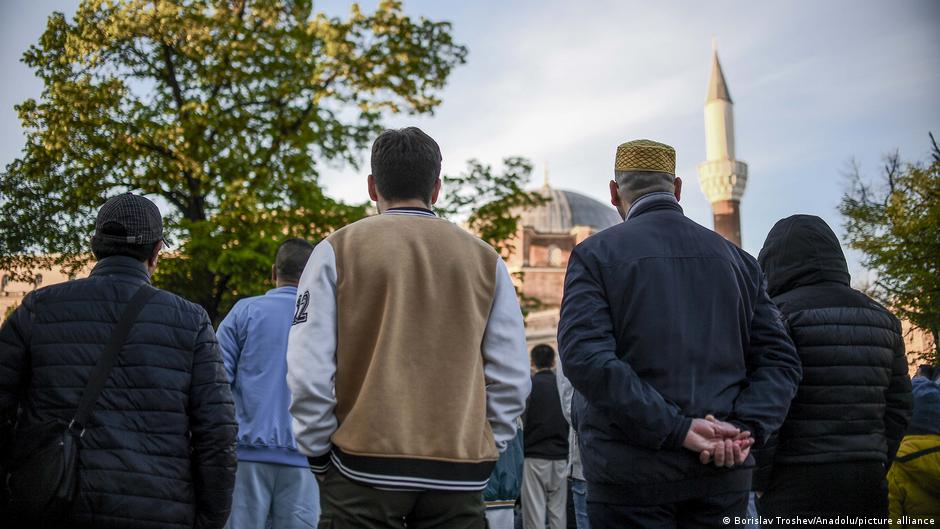
Banya Bashi Mosque in Sofia dates to the 16th century and reflects nearly 500 years of Ottoman rule. Bulgaria hosts the largest Turkish community in the Balkans, with about 500,000 ethnic Turks (roughly 8% of an 8 million population) concentrated in southern and north-eastern provinces. Most are descendants of Ottoman-era settlers and largely follow Sunni Islam while retaining the Turkish language. There are also Muslim Roma and immigrants from the Middle East and Afghanistan since 2015. A 2017 survey found 89% of Bulgarian Muslims identify as religious, but religiosity is relatively low and often cultural rather than strictly pious. Most observe Ramadan, while Friday mosque attendance and headscarf wearing are uncommon. Christians and Muslims share long-standing cultural, linguistic and culinary influences and coexist as neighbors.
"Bulgaria is home to the largest Turkish community in the Balkans. Around 500,000 ethnic Turks live in the southeastern European country of 8 million, making up about 8% of Bulgaria's total population, according to a 2021 census. Most are descendants of Turkish settlers who came to Bulgaria with the Ottoman conquest in the 14th and 15th centuries. Many settled in the southern and north-eastern provinces of Bulgaria. Members of this ethnic minority, who largely subscribe to Sunni Islam, still speak Turkish, unlike the Bulgarian-speaking Muslims known as Pomaks."
"There are also Muslims among Bulgaria's approximately 750,000 Roma. And more Muslims have immigrated from the Middle East and Afghanistan since 2015. A 2017 survey by political scientist Evgenia Ivanova of Sofia's New Bulgarian University found that 89% of Bulgarian Muslims identify as religious. But this does not necessarily translate to piousness. "Across Bulgaria, religiosity is relatively low," says Marina Liakova, a sociologist with the University of Education in Karlsruhe, Germany. She is an expert on migration and religion in Bulgaria. "For Christians and Muslims, it is more of a cultural religiosity." Marina Liakova says faith has played a cultural role above all Image: Bilyana Mihaylova/DW While most Muslims observe the fasting month of Ramadan, going to the mosque on Fridays is uncommon, Liakova says. It is likewise rare to find Bulgarian Muslim women wearing headscarves, she adds."
""During the 500 years of Ottoman rule, Christians and Muslims influenced each other culturally, linguistically and culinarily," explains the researcher. "In everyday life, both groups live together like neighbors in friendly coexistence.""
Read at www.dw.com
Unable to calculate read time
Collection
[
|
...
]