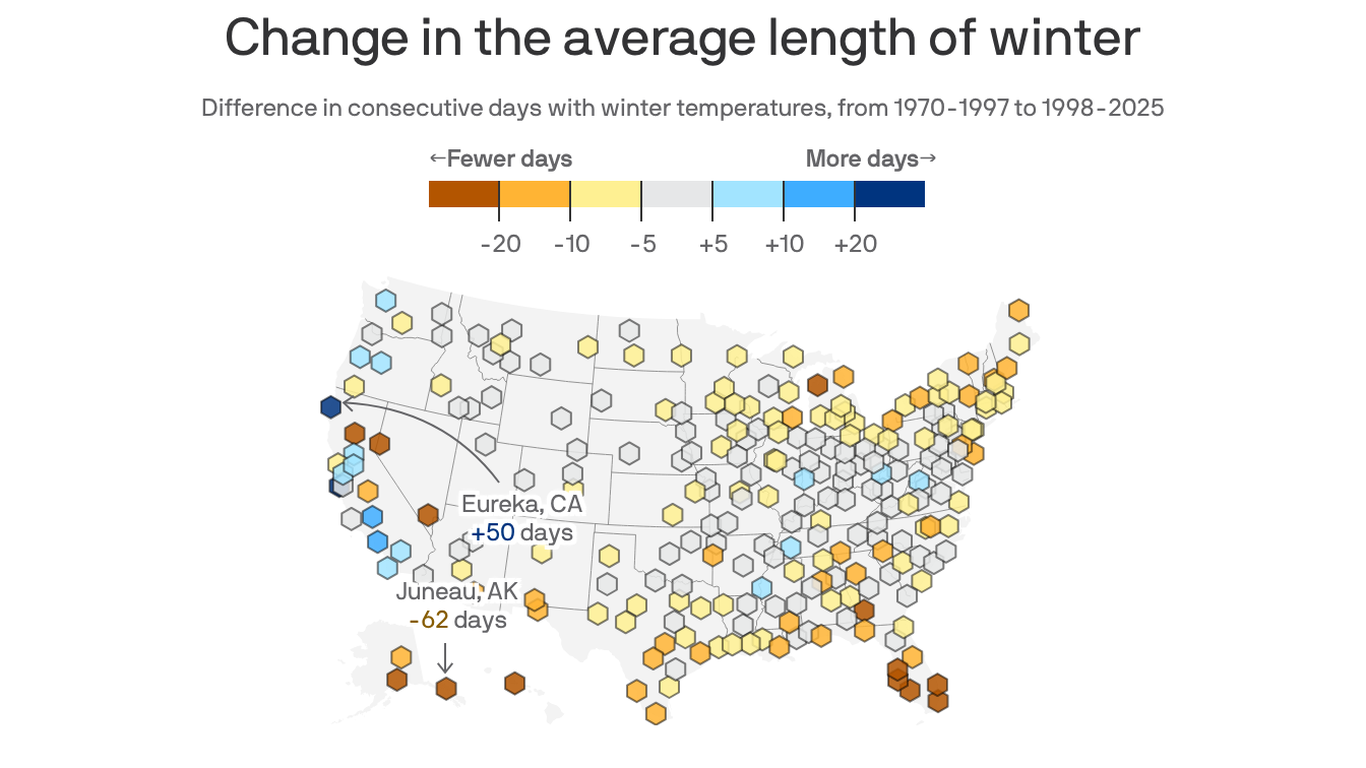
"The temperatures that have historically defined winter are now starting later and/or ending earlier in most U.S. cities. Climate Central defined winter as the coldest 90 days of the year in a row during the 1970-1997 period, then compared the frequency of those temperatures during the 1998-2025 period, using a temperature-based approach different from traditional calendar-date season definitions."
"Winter has shortened the most in Juneau (62 days) and Anchorage (49 days), consistent with exceptionally rapid warming in Alaska and other high-latitude locations. Among continental U.S. cities, Miami's winters have shortened the most at 38 days, while some California coastal cities show longer winters, with Eureka's winters now 50 days longer and Monterey's 46 days longer."
Climate Central analyzed 245 U.S. cities by comparing the coldest 90 consecutive days during 1970-1997 with temperature patterns from 1998-2025. Results show that 195 cities now experience shorter winters, with temperatures historically defining winter starting later or ending earlier. Juneau and Anchorage saw the most significant reductions at 62 and 49 days respectively, reflecting rapid Arctic warming. Miami experienced the largest continental U.S. decline at 38 days. However, some California coastal cities show longer winters, with Eureka gaining 50 days and Monterey gaining 46 days. Despite longer temperature-defined winters in some western regions, communities face severe snow droughts affecting tourism and water supplies.
Read at Axios
Unable to calculate read time
Collection
[
|
...
]