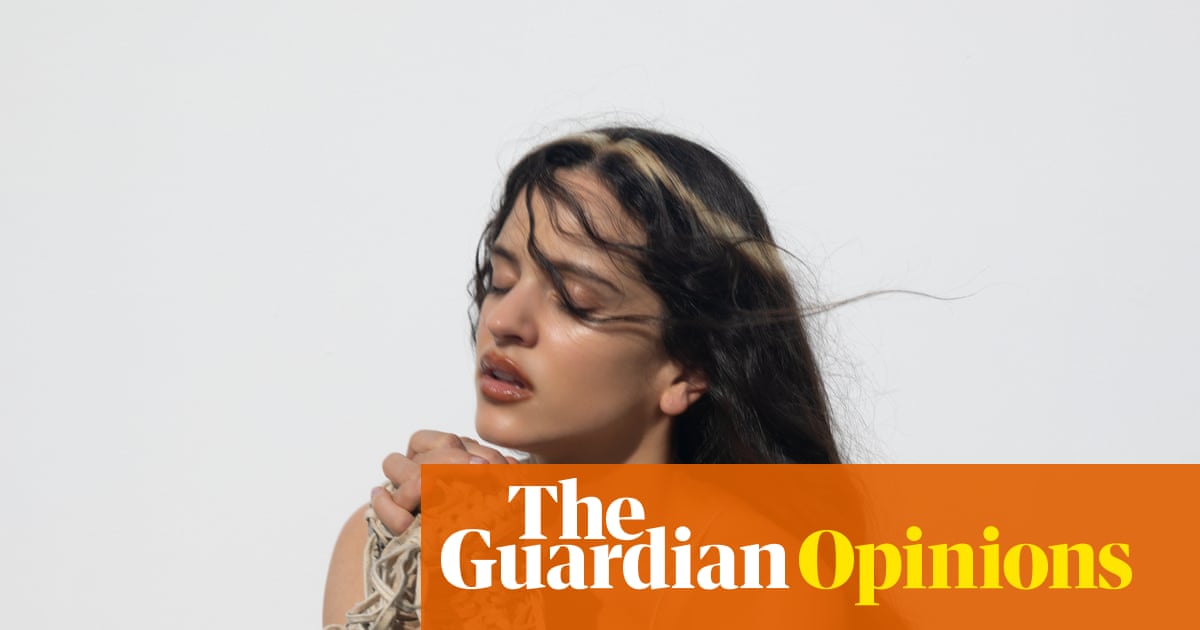
"I went into Lux primed not to like it. Not because I doubt Rosalia's virtuosic talents or her intense intellectual curiosity, but because the album's promotional campaign had already done too much work on my nerves. The rollout was relentless: thirsty reels teasing the album on social media, fashion-forward mysticism, even bringing Madrid's city centre to a halt everything about it felt designed to send the message that this is less a set of songs than a global event demanding reverence."
"Over the past decade, Rosalia has become Spain's biggest pop export, and Lux appears to inaugurate her imperial phase. The album debuted at No 1 in five countries, was voted the Guardian's album of the year, broke streaming records on Spotify, and reached No 4 in the US and UK charts, where non-anglophone pop rarely thrives. Multilingual and stylistically expansive, Lux is saturated with Catholic iconography, with lyrics in no fewer than 13 languages, and circling themes of transcendence, suffering and grace."
"Why is she doing nun-core now? I grumbled, watching Rosalia iron her clothes in the video for first single Berghain, flanked by an imposing chorus and orchestra. A revival of (conspicuously white) national-Catholic aesthetics seems like the last thing the world needs, especially laundered through someone with Rosalia's reach. Her ascent has made her a one-woman soft-power campaign for Spanish culture, the undisputed sovereign of la Marca Espana (Brand Spain, a government initiative) on the global pop stage."
Rosalia's Lux arrived with an aggressive promotional campaign that framed the release as a global spectacle rather than a conventional album. The record achieved major commercial and critical success, debuting at No 1 in five countries, breaking streaming records, and reaching high positions in US and UK charts. Lux features lyrics in at least 13 languages and heavily deploys Catholic iconography, exploring themes of transcendence, suffering, and grace. The album's luxurious aesthetic and framing of spiritual transcendence as a premium experience generated tension during a cost-of-living crisis and amid recent Vatican criticism of inequality. The project also intensified debates about national-Catholic aesthetics and Rosalia's role as a cultural soft-power figure for Spain.
Read at www.theguardian.com
Unable to calculate read time
Collection
[
|
...
]