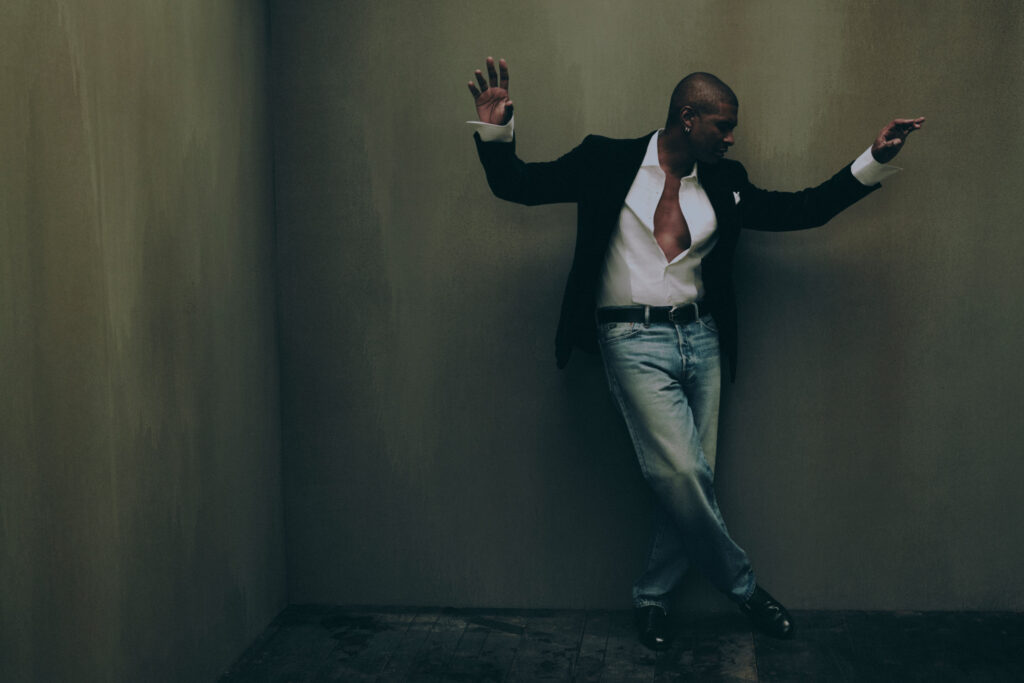
Usher's career spans multiple genres and creative fields, combining music, fashion, and art collecting with an approach that layers past experiences into new expression. He frames career as a collage, building meaning atop vulnerability, history, and evolution rather than abandoning prior work. Legacy and advocacy for Black artists and Black lives guide his choices. Atlanta and New York shaped his identity and aesthetic, informing projects like Ralph's Club New York, which channels New York's boldness and self-invention. Rob Franklin's work explores similar tensions of Blackness, expectation, and belonging. Creating space for the next generation of Black artists matters alongside addressing masculinity and legacy.
"Representing a career that spans genre and sound, Usher's ambition both challenges and provokes. Perhaps this is why the Atlanta-born singer continues to occupy popular culture, not only through his Grammy Award-winning recordings, but also across fashion and the fine arts, where he has emerged as a patron and collector. He identifies career as a collage. Evolution does not mean abandoning the past, but layering it, building new meaning atop experience, vulnerability, and history. For Usher, this work is inseparable from legacy."
""I want to carry that legacy, to make certain that I advocate for Black artists, for our Black lives," he says, returning to a recurring investigation of what it means to be a Black man today. Like Usher, Rob Franklin is fascinated by ideas of Blackness and legacy. His debut novel, Great Black Hope, follows a character navigating both New York's underground and Atlanta's Black high society, grappling with expectation and belonging."
Read at Documentjournal
Unable to calculate read time
Collection
[
|
...
]