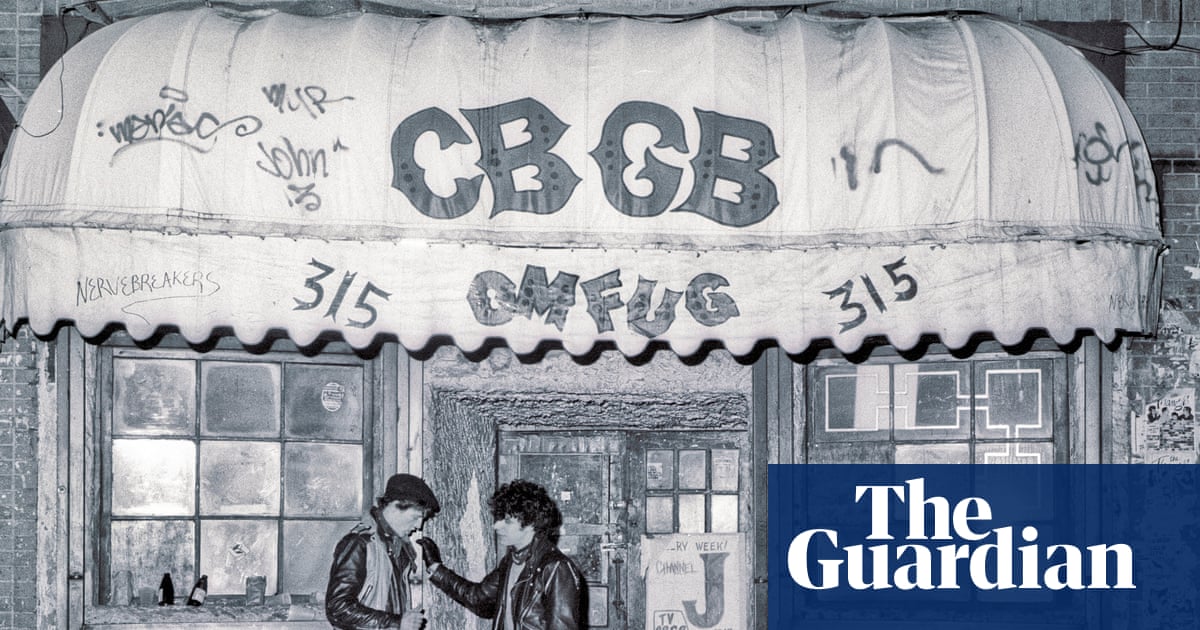
CBGB, located at 315 Bowery in New York's East Village, emerged fifty years ago as a revolutionary music venue that shaped modern rock. Founded by Hillel Kristal, a former marine and folk club performer, the bar initially promoted underground jazz before evolving into a hub for emerging artists. Young, unknown musicians created groundbreaking work across punk, new wave, no wave, hardcore, and other genres. The venue attracted celebrated musicians, record executives, and influential figures, becoming iconic despite closing two decades ago. Operating during an era when New York was affordable and artistically driven rather than commercially focused, CBGB established a template for multiple musical movements and remains historically significant in modern music.
"Inside, an array of young, unknown artists were making music that would change rock's sound and look, attitude and aesthetic. These outsiders created a template for punk, spoken word, powerpop, new wave, no wave, mutant funk, hardcore and so much more besides."
"Born in New York in 1931 to Russian Jewish immigrants, Kristal served as a marine, sang in folk clubs and then booked artists for the Village Vanguard jazz club, before opening Hilly's, a Greenwich Village bar featuring live gigs."
"After neighbours' complaints about loud music forced the venue to close in 1969, he leased 315 Bowery, reasoning no one would complain about noise on New York's skid row – his next-door neighbour, the Palace Hotel, mainly catered to homeless people."
Read at www.theguardian.com
Unable to calculate read time
Collection
[
|
...
]