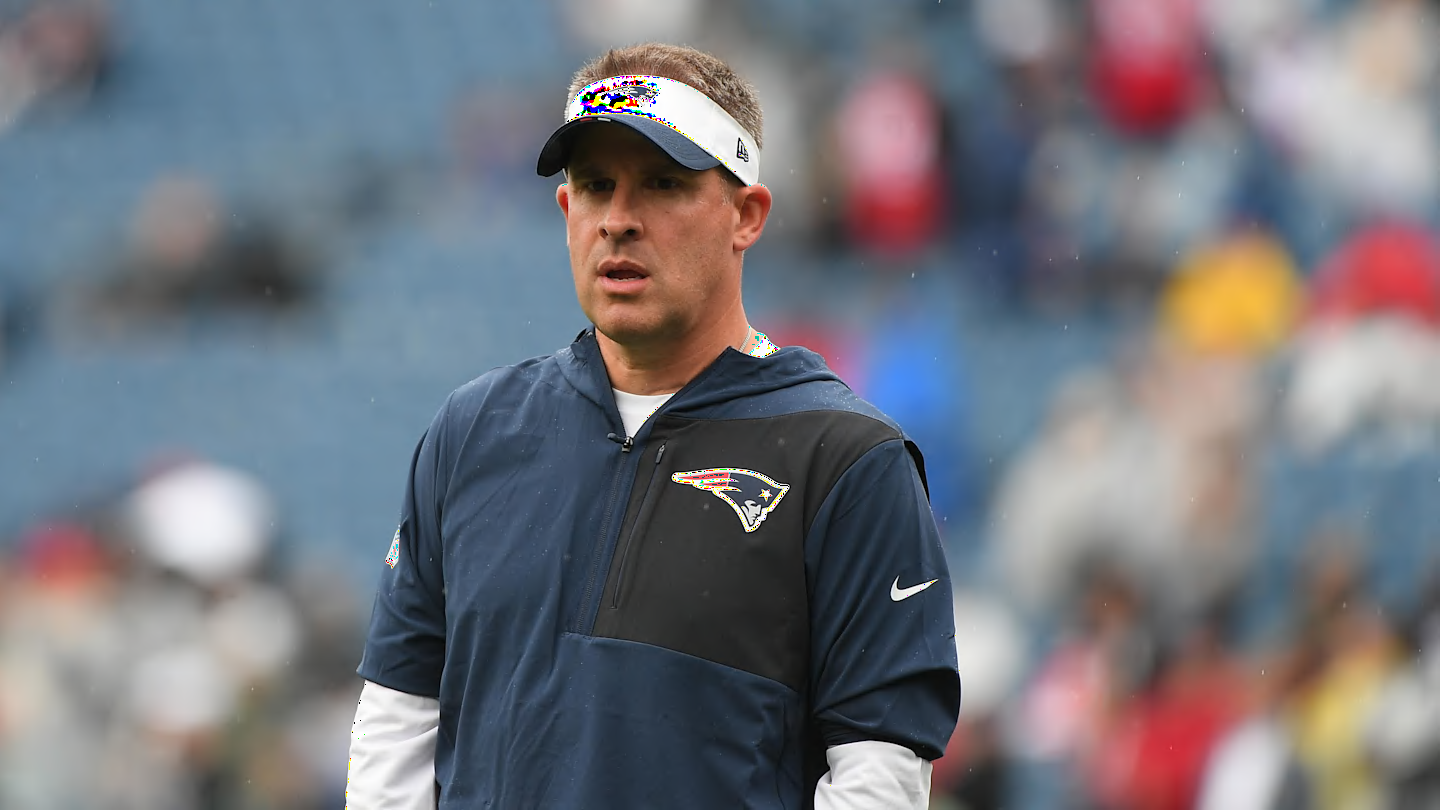
"The New England Patriots were thoroughly beaten down by the Seattle Seahawks in Super Bowl 60 on the offensive side of the ball, as both quarterback Drake Maye and offensive coordinator Josh McDaniels picked a bad time to put together their worst games of the season. While Maye will take on most of the responsibility for this stinker, McDaniels did him no favors by coming to battle with a game plan that was such a huge deviation from what the Patriots successfully ran"
"New England ran just under 80% of their snaps in 11 personnel (one running back, one tight end) after never topping 70% in any game prior to this one. The Patriots didn't run any sets from empty looks, had just one "jumbo" play with six offensive linemen, and ran 21 personnel (two running backs) at a season-low clip. What was McDaniels thinking?"
"The real secret ingredient behind Seattle's "Dark Side" defense is how effectively they can stop the run with five or six defensive backs on the field. With two ultra-versatile veterans in Leonard Williams and DeMarcus Lawrence on the line and rookie safety Nick Emmanwori functioning like an extra linebacker, Seattle is uniquely equipped to slow down New England. Part of the reason some offenses from the Kyle Shanahan tree can struggle against Seattle is how compact they often are."
New England's offense failed in Super Bowl 60 due to poor execution by quarterback Drake Maye and a game plan from offensive coordinator Josh McDaniels that deviated sharply from regular-season approaches. McDaniels relied on 11 personnel on nearly 80% of snaps, avoided empty formations, used only one jumbo play and minimized two-back sets. Seattle's "Dark Side" defense countered by stopping the run with five or six defensive backs, plus versatile linemen Leonard Williams and DeMarcus Lawrence and safety Nick Emmanwori operating like an extra linebacker. The usual counters—loading big formations to run or spreading defenses to create lighter boxes—were not employed until late. McDaniels also appeared concerned about pass protection against Seattle's aggressive front.
Read at Musket Fire
Unable to calculate read time
Collection
[
|
...
]