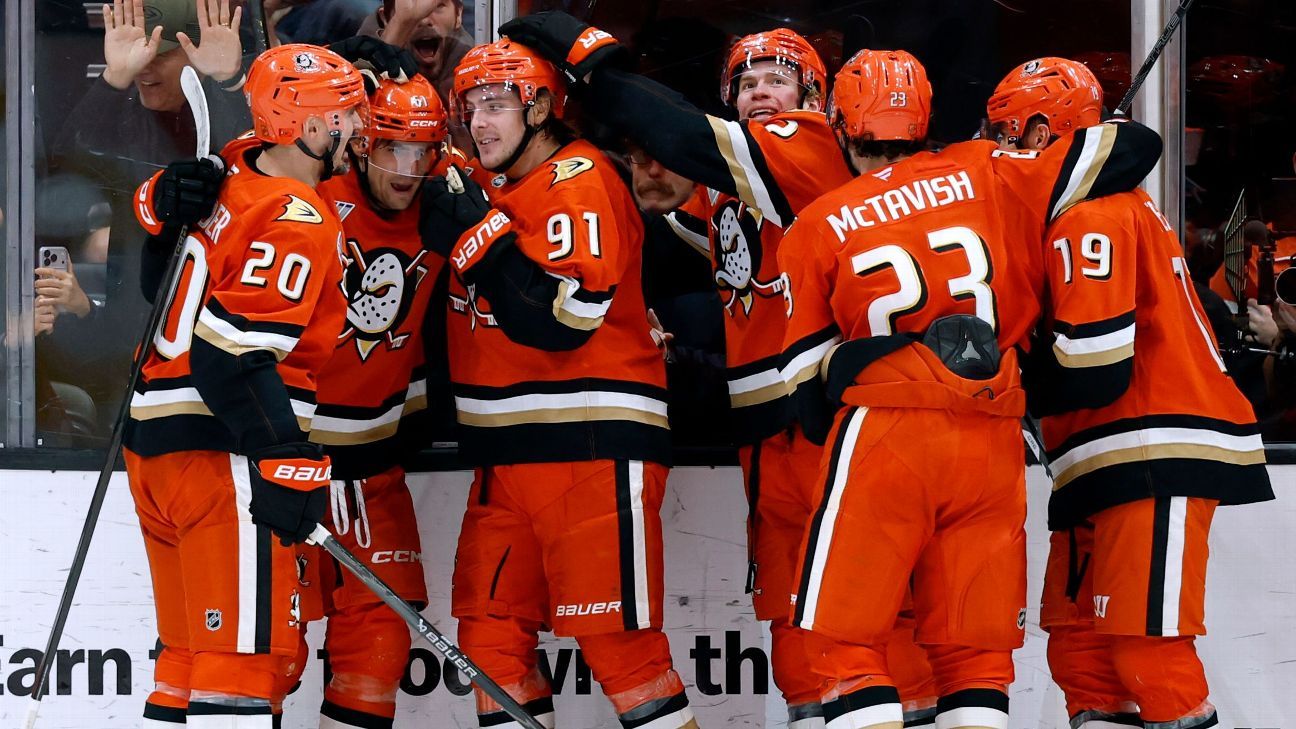
"In the season's first 425 games, 27.3% of them had the score tied after regulation, requiring a resolution in either the 3-on-3 overtime or in the shootout. If that trend holds, it would be the highest percentage of games going to overtime since the shootout was implemented in the 2005-06 season, topping the 25% of games that went to OT in the 2013-14 season."
""I think it's a bit of a 'squished can,' to be honest with you," he said. "You see a lot of the top teams over the last few years and how they've lost players to other teams," he said. "And then the development of some of these young stars in the league that now have now two, three years in the league ... I think it's squished the league a little bit.""
"Parity is the force behind that squish -- or 'competitive balance,' as NHL commissioner Gary Bettman has referred to it during the salary cap era. Entering Thursday night, 28 out of 32 teams in the NHL had a points percentage of .500 or better. At the end of last season, that number was 23 teams. "Parity" is the go-to answer for many in the NHL. "I guess teams are even this year. There's a lot of tie games, a lot of one-goal games," Stars forward Mikko Rantanen said."
Overtime games are occurring at an unusually high rate early in the 2025-26 NHL season. In the first 425 games, 27.3% were tied after regulation, requiring 3-on-3 overtime or a shootout, a pace that could surpass the 25% mark from 2013-14 and be the highest since the shootout era began in 2005-06. One leading explanation is increased parity compressing team performance, driven by top teams losing players and accelerated development of young stars, which produces many close and one-goal games. League-wide balance is reflected in 28 of 32 teams holding a .500-or-better points percentage, up from 23 last season.
Read at ESPN.com
Unable to calculate read time
Collection
[
|
...
]