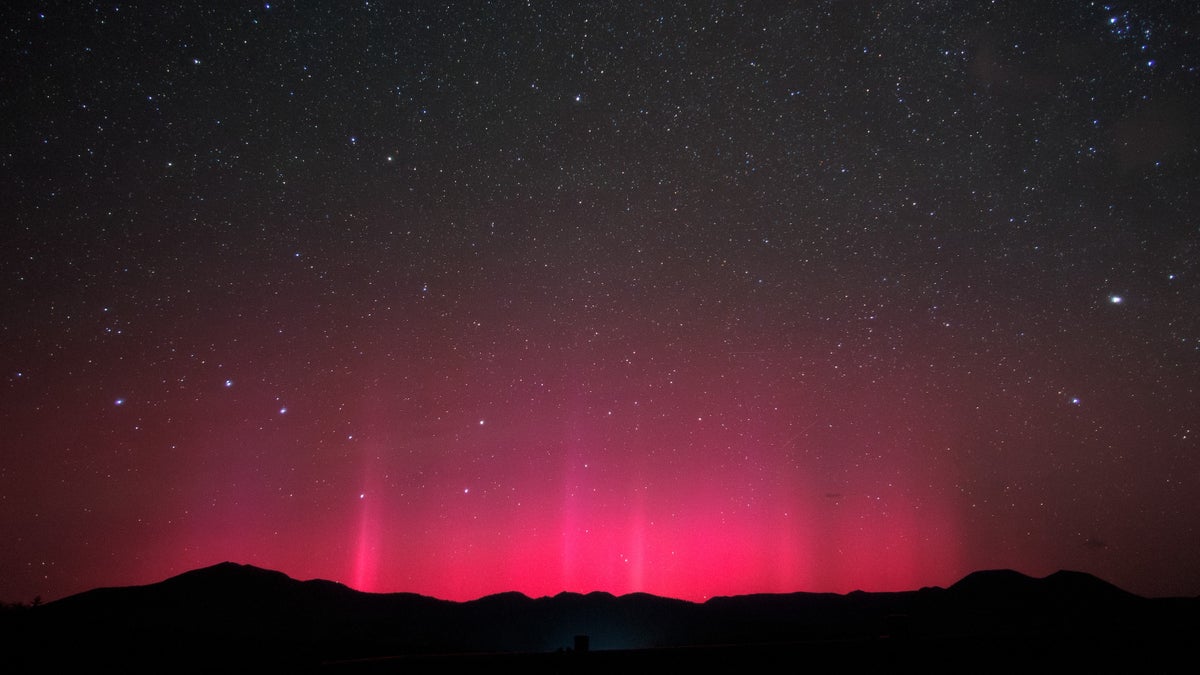
In the winter of 1204, red and white auroras were observed over Kyoto, recorded by Fujiwara no Sadaie. These rare three-day auroras were studied by physicist Hiroko Miyahara and her team, who analyzed tree rings for atomic variations caused by solar storms. They identified spikes of carbon-14, a result of cosmic rays interacting with the atmosphere. Historical literature helped narrow the search to the period between C.E. 1196 and 1211, revealing the connection between solar activity and auroras.
"Three-day-long auroras are extremely rare, says Hiroko Miyahara, a physicist at the Okinawa Institute of Science and Technology. To trace the solar events that caused these auroras, Miyahara and her colleagues looked for spikes of telltale atomic variations trapped in 13th-century tree rings."
"When the sun gets violently active, it can throw coronal mass ejections and bursts of particles with energies of up to 10 billion electron volts toward Earth. If these high-energy cosmic rays hit our atmosphere, they trigger a cascade of nuclear reactions that produce rare versions of atoms, including carbon-14."
"Extreme solar storms leave massive carbon-14 spikes in tree rings, but smaller-scale events are much harder and more time-consuming to detect. That's why we need literature accounts to narrow down the candidate period, Miyahara says."
Read at www.scientificamerican.com
Unable to calculate read time
Collection
[
|
...
]