""Before this study, Cretaceous marine ecosystems were generally understood as worlds in which large vertebrate predators occupied the top of the food web. Our study changes that picture," said Yasuhiro Iba."
"The only octopus body parts that do fossilize are their chitinous jaws, which look a bit like parrot beaks. These beaks are also extremely hard to spot when they are embedded in dense marine rock formations."
"To find them, Iba's team deployed a technique they called Digital Fossil Mining, using high-resolution grinding tomography to physically shave away microscopic layers of the rock."
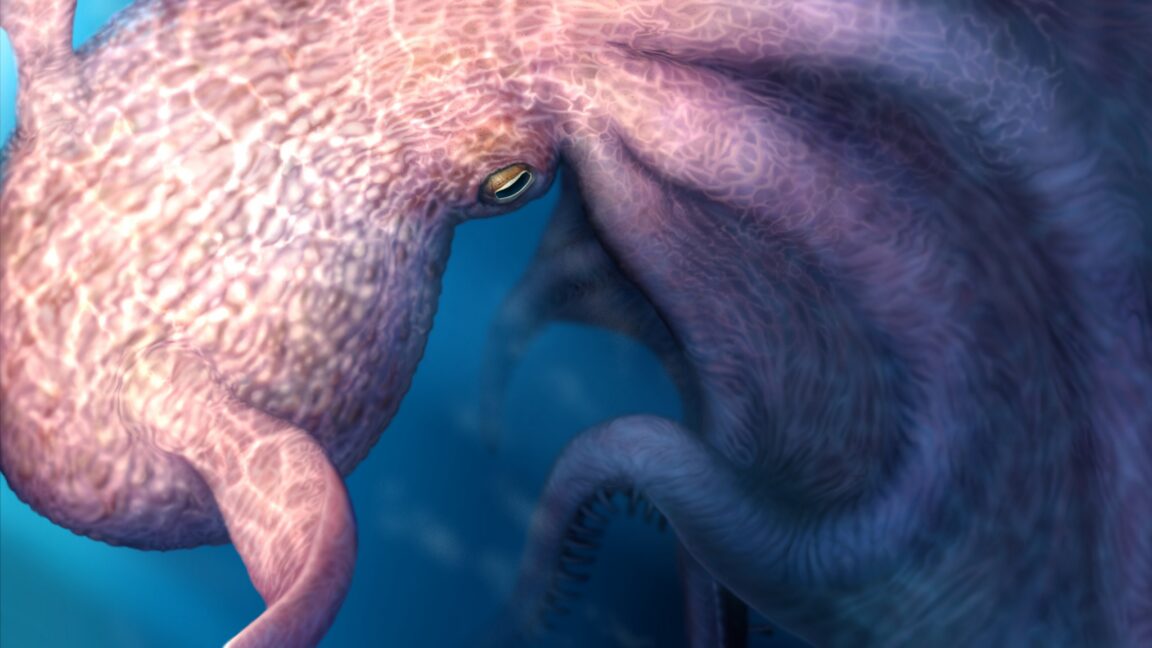
Research reveals that ancient finned octopuses, up to 19 meters long, were apex predators in the late Cretaceous oceans. These octopuses possessed hardened beaks and high intelligence. Traditionally, marine ecosystems were thought to be dominated by large vertebrate predators, with invertebrates seen as prey. The rarity of octopus fossils has obscured their role in the food chain. A new technique called Digital Fossil Mining allowed researchers to uncover these fossils, changing the understanding of Mesozoic marine life.
Read at Ars Technica
Unable to calculate read time
Collection
[
|
...
]