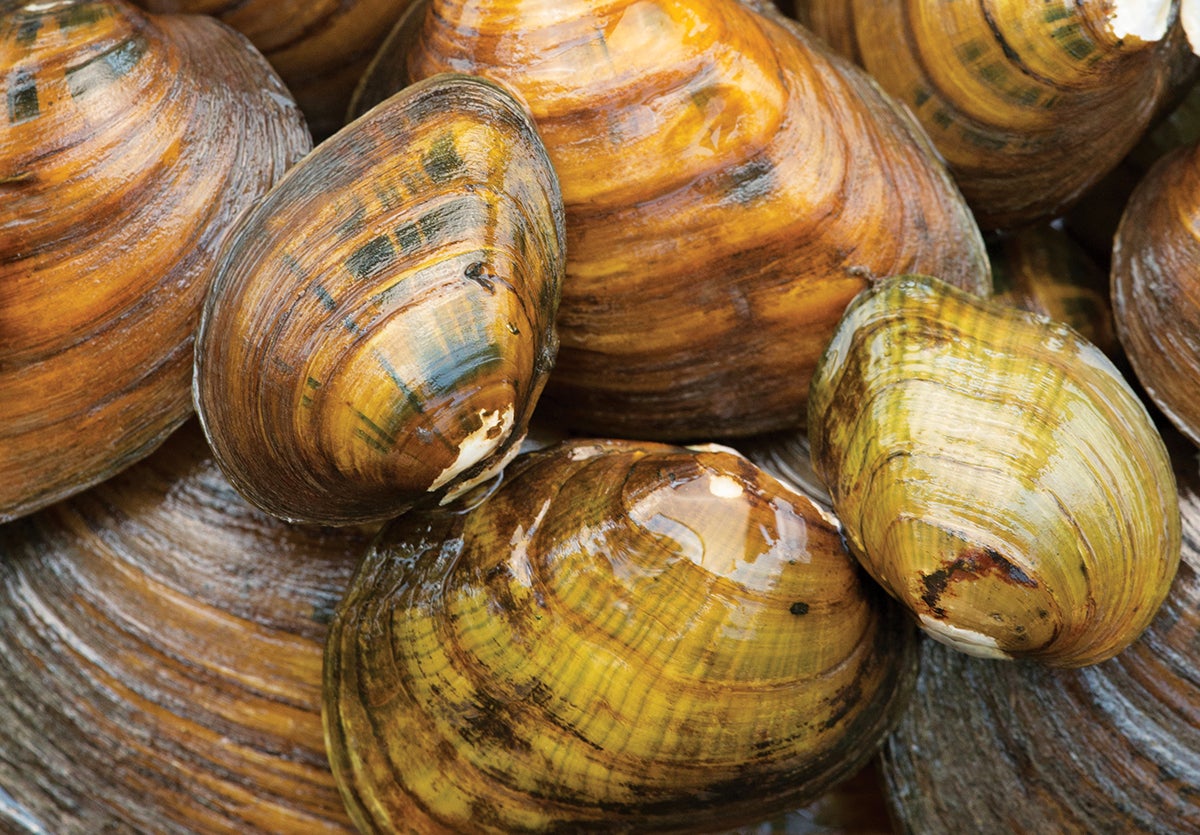
Freshwater mussels, including the pocketbook species, employ intricate strategies to ensure their larvae are spread by fish. These brainless invertebrates filter water for food while using lures or other methods to attract fish. When a fish bites, it inadvertently consumes mussel larvae, which then attach to the fish's gills. After several weeks, the larvae drop to the riverbed, often upstream from where they initially boarded the fish. This reproductive strategy highlights the remarkable adaptations of approximately 300 mussel species in North America.
"The mussel, called a pocketbook, was fishing for bass. A bass, it seems, would mistake those protrusions for an edible minnow. It would snap at the lure, whereupon, instead of food, it would get a mouth blast of mussel larvae—thousands of bivalved vampires smaller than salt grains, some of which would immediately latch on to its gills and start feeding on its blood."
"Roughly 300 species of freshwater mussel have been documented in North America. All of them are brainless invertebrates. They spend most of their lives lodged in riverbeds, filtering algae and bacteria from the passing water. Yet they all get fish to spread their spawn, and most deploy elaborate stratagems."
"Some mussels, like the pocketbook, convince a fish to bite into a lure full of larvae; others first snap their shell shut around the fish's head and spray their babies into its mouth. The larvae spend several weeks attached to the fish's gills, metamorphosing into juvenile mussels, then let go and drop to the riverbed."
Read at www.scientificamerican.com
Unable to calculate read time
Collection
[
|
...
]