""Apart from our scientific curiosity, such experiments show that at extremely small sizes, the perovskite LEDs can still hold reasonable efficiencies," says Zhao."
"The researchers created a semiconductor from a perovskite, a class of materials that includes not only common minerals from the Earth's mantle, but also ones that are used in advanced solar panels."
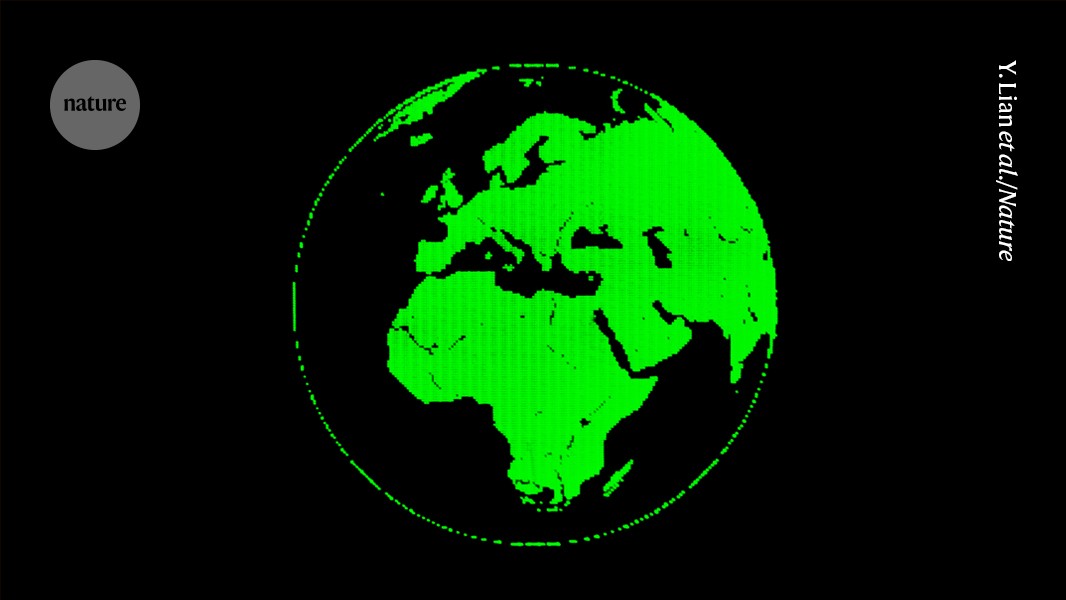
"The image above was shown on a monochromatic display with pixels less than 100 micrometres across, about the width of a human hair."
"Physicists have created the tiniest light-emitting diode (LED) displays ever, with pixels only 90 nanometres wide - the size of a typical virus."
Researchers at Zhejiang University have successfully created the tiniest LED displays with pixels less than 100 micrometres, and even scaling down to 90 nanometres, comparable to a virus. They utilized perovskite materials for their semiconductors, allowing these tiny LEDs to maintain brightness and efficiency as their size decreased. The results, detailed in Nature, highlight not only a significant scientific achievement but also the potential advantages of perovskite LEDs over traditional LEDs in terms of performance at reduced scales.
Read at Nature
Unable to calculate read time
Collection
[
|
...
]