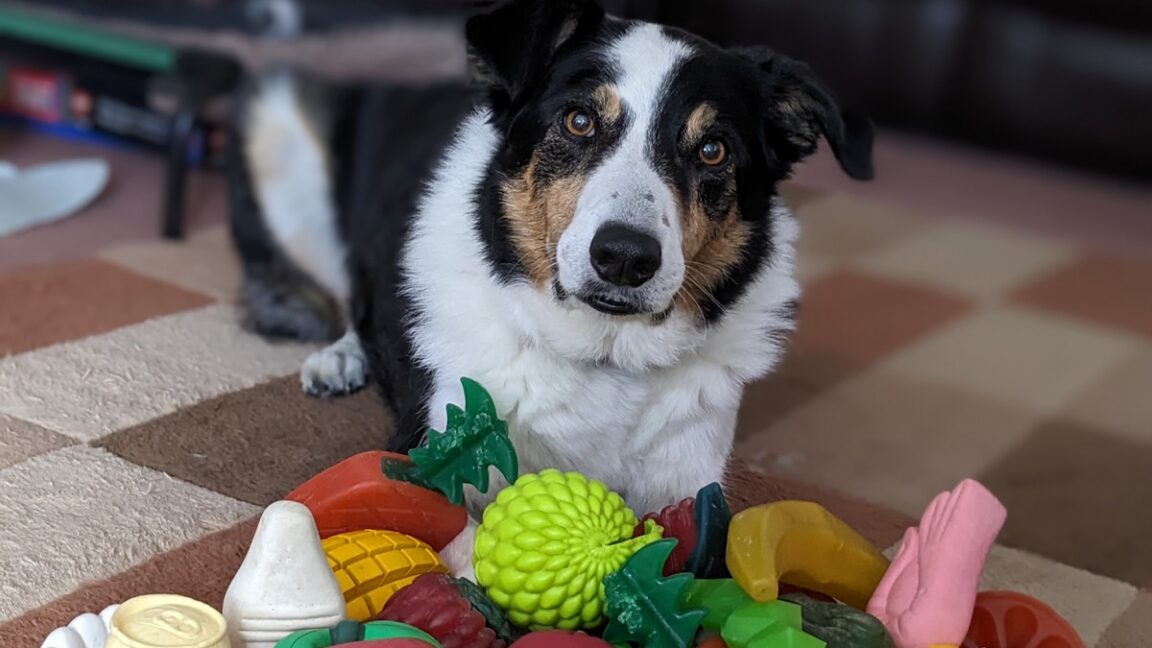
Experiments compared direct address and overhearing conditions when naming new toys to GWL (gifted word learner) dogs. Eighty percent of dogs correctly chose toys after direct address; one hundred percent succeeded after overhearing. A third variation removed temporal continuity by hiding the toy while naming it; dogs formed object-label mappings without continuous visual contact and retained those mappings after two weeks. Typical non-GWL border collies did not show evidence of learning, displaying a novelty-based toy preference instead of stable object-label associations. GWL dogs are extremely rare, so effects do not generalize to typical dogs.
"Next, the entire experiment was repeated with one key variation: This time, during the training protocol, rather than addressing the dogs directly when naming new toys, the dogs merely watched while their owners talked to another person while naming the toys, never directly addressing the dogs at all. The result: 80 percent of the dogs correctly chose the toys in the direct address condition, and 100 percent did so in the overhearing condition."
"The owner would show the dog a new toy, place it in a bucket, let the dog take the toy out of the bucket, and then place the toy back in. Then the owner would lift the bucket to prevent the dog from seeing what was inside and repeatedly use the toy name in a sentence while looking back and forth from the dog to the bucket. This was followed by the usual testing phase."
"But GWL dogs are extremely rare, and the findings don't extend to typical dogs, as the group discovered when they ran both versions of the experiment using 10 non-GWL border collies. There was no evidence of actual learning in these typical dogs; the authors suggest their behavior reflects a doggy preference for novelty when it comes to toy selection, not the ability to learn object-label mappings."
Read at Ars Technica
Unable to calculate read time
Collection
[
|
...
]