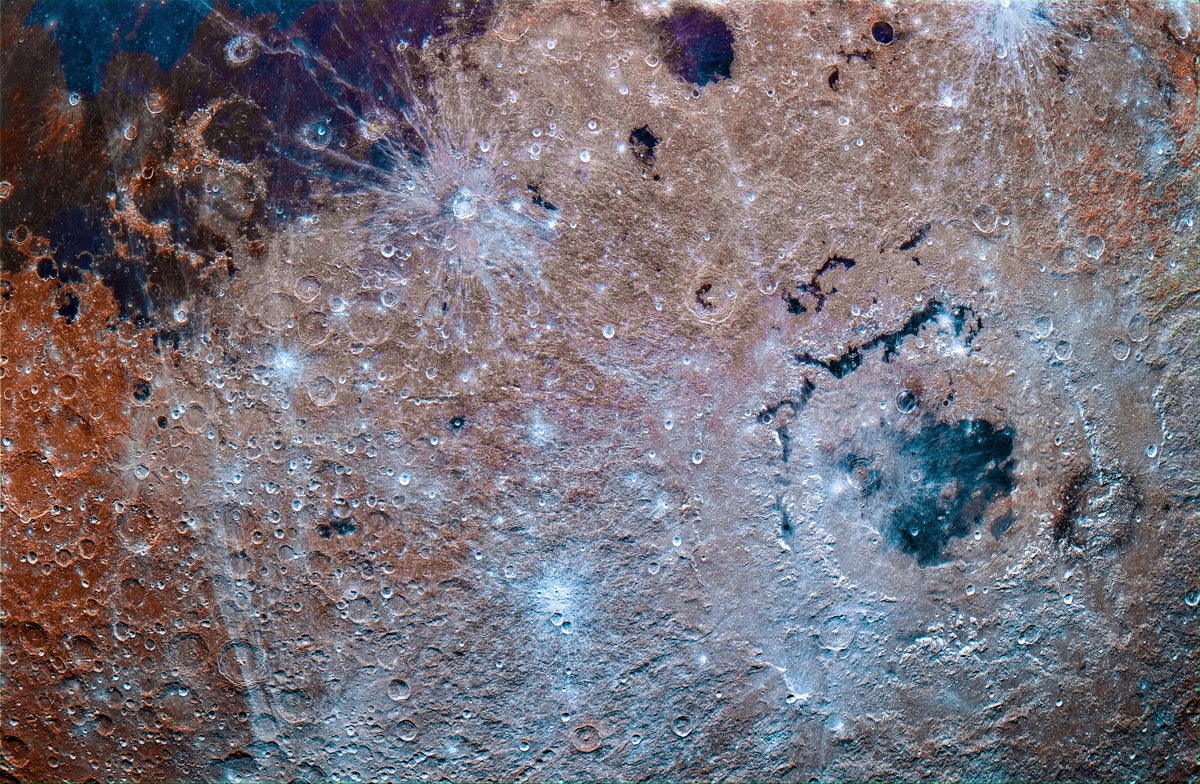
NASA’s Artemis II crew captured extensive photographic data during a historic flyby around the Moon’s farside in April. From capsule windows, the lunar surface appeared gray and heavily pocked, but NASA later released unprecedented views after sorting and processing tens of thousands of images. Many images were initially gray, so an image team continued enhancing and color-enhancing the data to reveal minerals and impact craters. Cosmic photographer Andrew McCarthy previously worked with mission commander Reid Wiseman before launch, teaching him how to capture raw photographs suitable for later processing. Together they planned bursts of photographs, sometimes up to a hundred at a time, to uncover hidden details and colors rather than simply reproduce what the eyes see.
"NASA's Artemis II crew made their historic flyby around the farside of the moon in April, they saw from their capsule windows the gray and pocked lunar surface. One of the mission's objectives was to capture ample photographic data, and throughout and after the spaceflight, NASA released unprecendented views of the moon. Now the image team at the space agency is still sorting through and processing the tens of thousands of images captured during the mission."
"Many of them are incredible, but they are all a bit gray. The farside of the moon, color-enhanced to reveal minerals and impact craters. Thankfully, cosmic photographer Andrew McCarthy worked with mission commander Wiseman before the launch, teaching the astronaut how to get just the right kind of raw photographs on which he could work magic."
"I thought it would be a really cool opportunity to create photos that were maybe a little less scientific and a little more artistic, McCarthy says. McCarthy's work had already drawn Wiseman's attention on social media. And in the weeks leading up to the launch, the pair worked together to plan how to capture bursts of photographs from the moon's far side, sometimes a hundred at a time."
"I'm not really thinking in terms of reproducing what my eyes are seeing; I'm looking for hidden details; I'm looking for hidden colors, McCarthy says. An image of the farside of the moon made up of about 100 photographs"
Read at www.scientificamerican.com
Unable to calculate read time
Collection
[
|
...
]