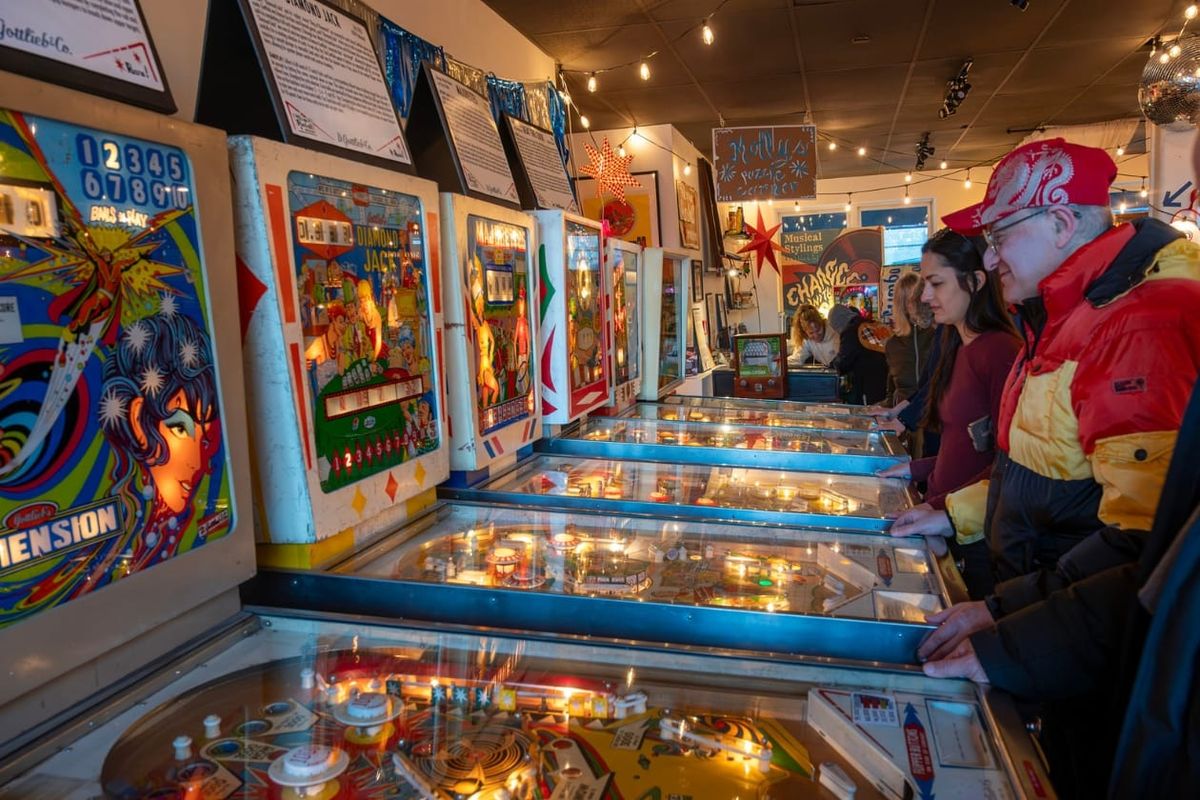
Pinball was banned in New York City from January 21, 1942 until 1976 following an anti-gambling crusade. Mayor LaGuardia’s actions led to thousands of machines being confiscated and destroyed. Officials viewed pinball as vice that encouraged wrongdoing, while players saw it as cheap, harmless fun. Disagreement centered on whether pinball was a game of chance or skill. In the 1970s, Roger Sharpe demonstrated that winning depended on skill, helping overturn the ban. Pinball’s roots trace to European lawn games and a French tabletop game called bagatelle, with later developments including Whiffle in 1931, a coin-operated spring-plunger game.
"Players and politicians disagreed. While pinball fans saw the game as cheap, harmless fun, city officials saw it as vice that "breeds graft and corruption and incites children to steal to get the money to play the machines." Pinball was banned in New York City on January 21, 1942 and remained an illegal pastime until one player, Roger Sharpe, proved it took skill to win in the 1970s."
"The origins of pinball can be traced back to 16th century European lawn games where people would roll balls into holes in the ground, but the most direct predecessor of pinball is a game developed in 18th century France called bagatelle. Bagatelle is a tabletop game where a ball is rolled onto the board with the objective of getting to holes guarded by wooden pins."
"Whiffle is largely recognized as the first version of pinball as we know it today, though it is still quite different than the dinging, flashing, colorful games you might imagine. Created in 1931 by Automatic Industries Inc., this game was coin-operated and had a spring-loaded plunger."
"Pinball was an accessible and cheap form of entertainment which grew in popularity with both children and adults throughout the Great Depression. The game made its way into bars, arcades, and shops across the city. By 1941 there were estimated to be more than 11,000 machines in New York."
Read at Untapped New York
Unable to calculate read time
Collection
[
|
...
]