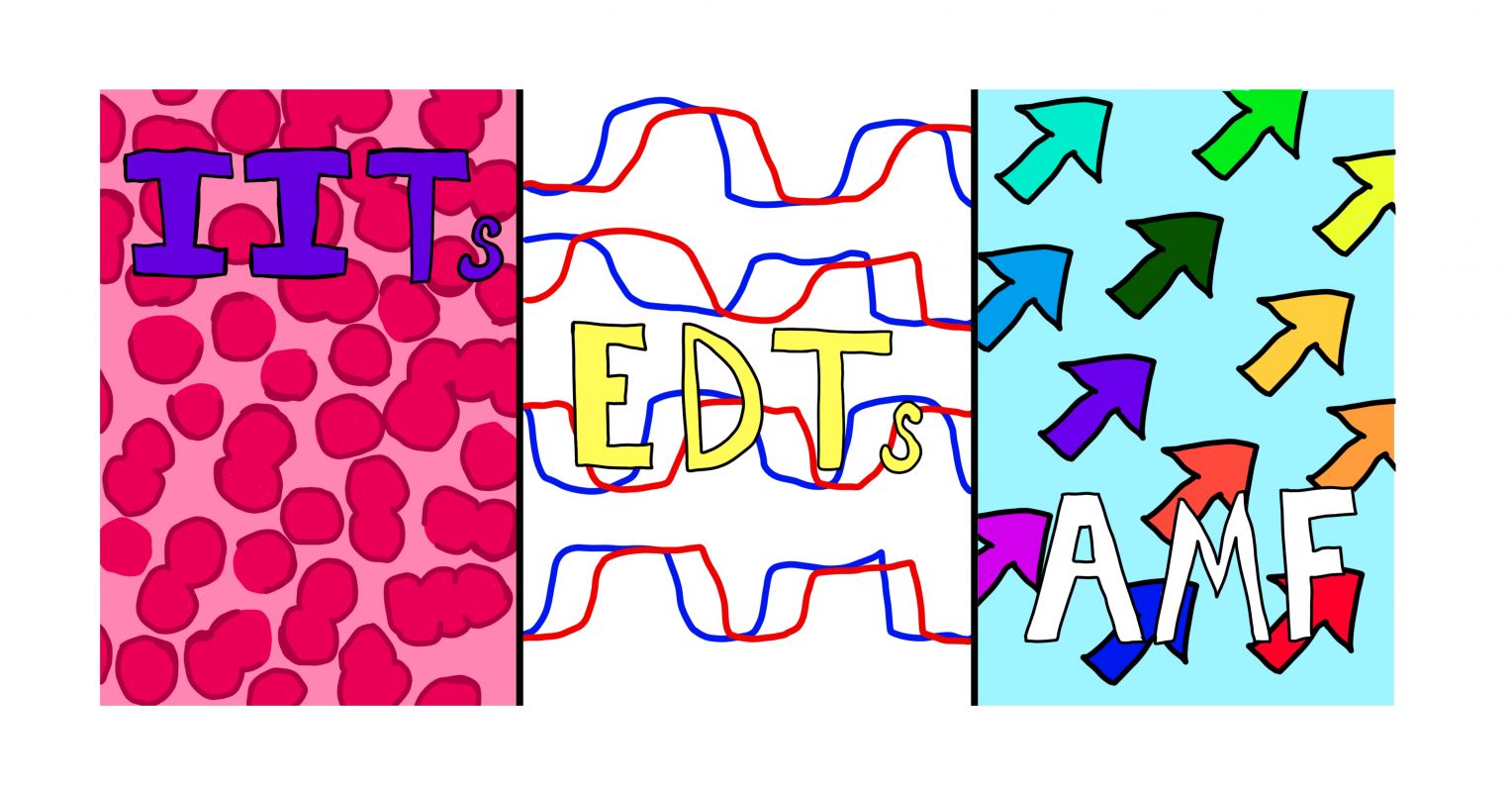
"The contemporary neuroscience perspectives of predictive processing ( Clark, 2022; Rao & Ballard, 1999) and active inference ( Parr et al., 2022) have shown a lot of promise in refining the concept of affect over the past three decades. As recently outlined by Velasco and Loev (2021), there are two families of theories stemming from predictive processing and active inference that attempt to account for "the mark of the affective" (i.e., valence)."
"The first they describe as interoceptive inference theories (IITs; Barrett & Simmons, 2015; Seth, 2013; Seth & Friston, 2016), which suggest that affective valence reflects the always-ongoing generation of interoceptive predictions to match the context of what's happening in the environment. In IITs, the constant interoceptive predictions regulating the internal milieu of the body are a necessary part of allostasis, the process of achieving stability at all times through context-based change ( Sterling, 2012)."
Affect constitutes a positive-to-negative conscious experience without consensus explanation. Predictive processing and active inference provide two main theoretical families addressing valence. Interoceptive inference theories link valence to continuous interoceptive predictions that support allostasis. Critics note that not all bodily sensations are inherently affective and some affective influences lack clear allostatic relevance. Alternative theories emphasize prediction-error reduction dynamics in neural processing as the basis of affect. A separate framework proposes affect as the evaluative context that shapes the brain's goals. These frameworks offer bodily regulation, error dynamics, and goal evaluation as distinct mechanisms for valence.
Read at Psychology Today
Unable to calculate read time
Collection
[
|
...
]