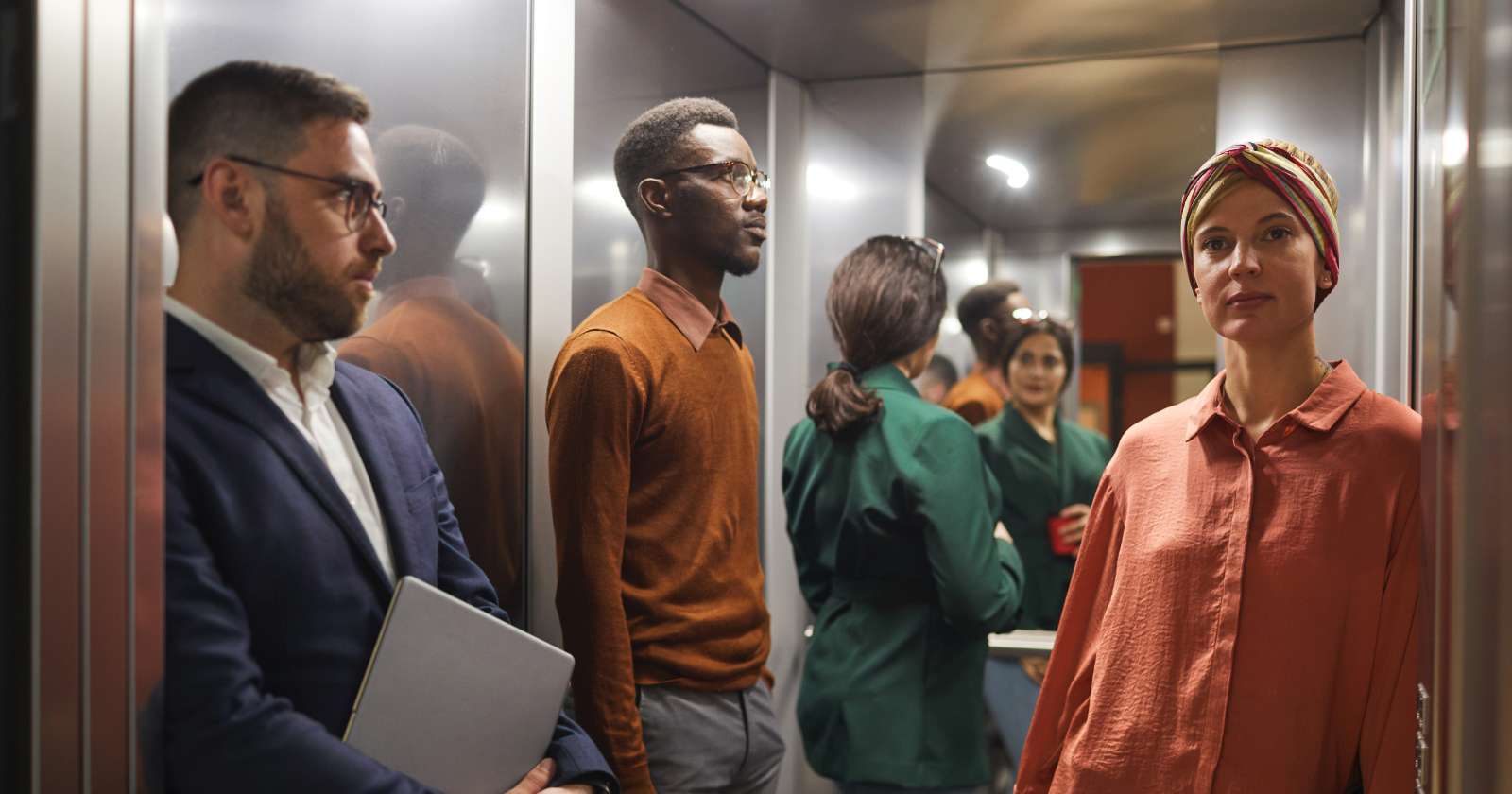
"In most public settings, you have control over proximity to strangers. You choose where to sit on the train. You can step back if someone gets too close in a queue."
"Elevators remove that control completely. You're trapped in a small box with strangers, standing closer than you'd ever choose to stand near someone you don't know."
"Every person in that lift is performing a carefully calibrated routine designed to communicate one message: I'm aware of you, but I'm not a threat."
"According to research on personal space and proxemics, humans have predictable comfort zones for different types of relationships."
Elevators create a unique social environment where individuals lose control over personal space, leading to a transformation in behavior. In these confined spaces, people avoid eye contact and angle their bodies away from each other, creating an atmosphere of studied indifference. This behavior is not merely awkwardness but a sophisticated negotiation through nonverbal communication. Research indicates that humans have specific comfort zones, and elevators challenge these norms by forcing proximity with strangers, altering typical social interactions.
Read at Silicon Canals
Unable to calculate read time
Collection
[
|
...
]