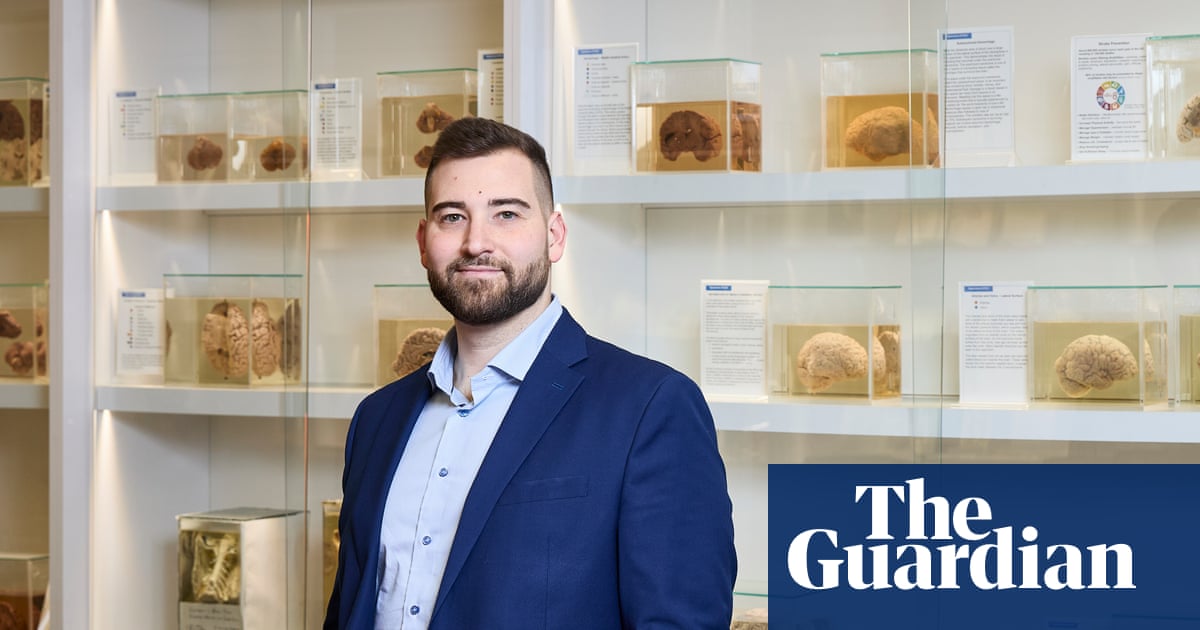
"I hate it. I've asked the neuroscientist Ben Rein how he feels about the online sea of junk neuroscience we swim in the dopamine fasts, serotonin boosts and people regulating their nervous system and this is his kneejerk response. He was up early with his newborn daughter at his home in Buffalo, New York, but he's fresh-faced and full of beans on a video call, swiftly qualifying that heartfelt statement."
"Let me clarify my position: I don't hate it when it's accurate, but it's rarely accurate. He draws my attention to a reel he saw recently on social media of a man explaining that reframing pain as neurofeedback, not punishment activates the anterior cingulate cortex (a part of the brain involved in registering pain). That's genuinely never been studied; you are just making this up, he says."
"He posted a pithy response on Instagram, pleading with content creators to leave neuroscience out of it. That's why I think it's especially important for real scientists to be on the internet, he says. We need to show the public what it looks like to speak responsibly and accurately about science. Connection is good for us, like vitamin D or getting enough sleep."
Online spaces contain widespread misleading neuroscience claims such as dopamine fasts, serotonin boosts, and unvalidated nervous-system regulation techniques. A specific claim that reframing pain as neurofeedback activates the anterior cingulate cortex has not been studied and exemplifies fabricated causal assertions. Public-facing scientists can correct misinformation by modeling responsible, accurate explanations. One scientist combines peer-reviewed research credentials and academic teaching with large social-media reach to explain complex brain science in accessible terms. Social connection emerges as a central theme, with emphasis on real-world benefits and the need to address a growing 'post-interaction' environment.
Read at www.theguardian.com
Unable to calculate read time
Collection
[
|
...
]