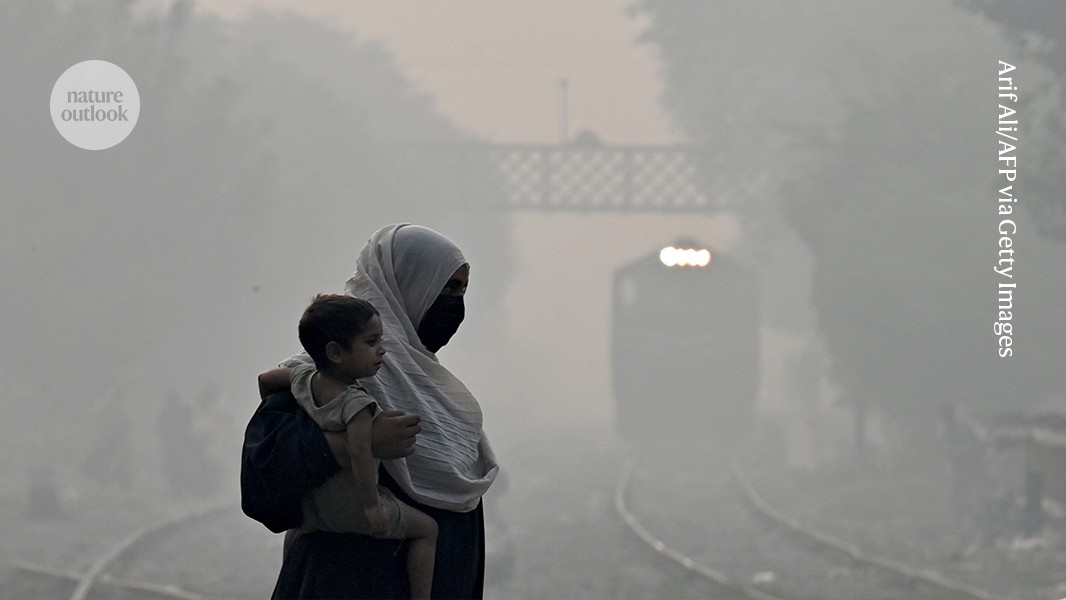
"Sreeni Chadalavada and colleagues found that research on AI and air pollution surged after 2021. For some tasks, such as predicting concentrations of coarse particulate matter, machine‑learning systems can achieve 98% accuracy. The models are also gaining popularity for analyses that require an understanding of complex space and time patterns. Examples include how pollution disperses over a city, changes across seasons and interacts with variables such as traffic and weather."
"The most common limitations to using these models are uneven data quality, programs that do not transfer well across regions, a hesitancy to trust results owing to models' 'black box' nature and steep energy costs. The authors predict that if AI models can be improved, they could provide earlier pollution warnings, more accurate forecasts and better guidance for city planners and public-health officials."
Air pollution ranks as the fifth-leading global health risk, with particulate-matter exposure linked to about 4.2 million deaths annually and worsening threats from climate-driven wildfires. A systematic review of 65 studies shows research on AI and air pollution surged after 2021. Machine-learning approaches can reach high accuracy for certain tasks—up to 98% for coarse particulate concentrations—and excel at modelling complex spatial and temporal patterns such as urban dispersion, seasonal changes, and interactions with traffic and weather. Stronger performance arises from combining ground sensors, weather data, satellite imagery and traffic information. Key obstacles include uneven data quality, poor regional transferability, model opacity and high energy costs, while improved models could enable earlier warnings, more accurate forecasts and better planning for cities and public health.
Read at Nature
Unable to calculate read time
Collection
[
|
...
]