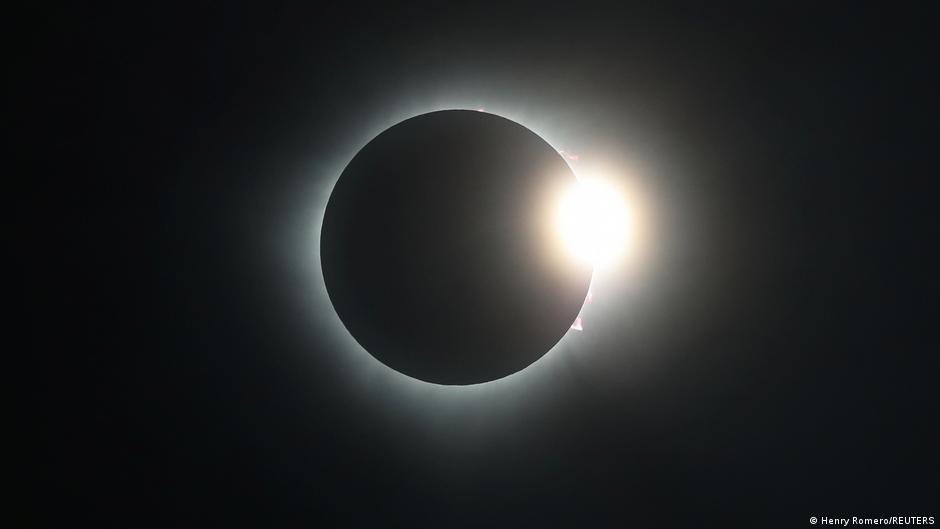
"Except for penguins and Antarctic scientists, few will be able to enjoy February's annular solar eclipse. That's because this eclipse will see the moon pass between the Earth and sun across the path of the southern continent, reaching a maximum at around 12:12pm UTC. People living in Eswatini, Lesotho, Madagascar, Mozambique, South Africa, Zimbabwe, and the southern parts of Botswana, Malawi, Namibia, Tanzania and Zambia, will only see a partial eclipse March 3."
"There will be plenty to see in the night sky this year, including about a dozen meteor showers. Lyrids, visible April 16-25, peaking on April 22, near the constellation of Lyra. Eta Aquariids, visible April 19 until May 28, peaking May 6, near the star Eta Aquarius in the constellation of Aquarius. Delta Aquariids, visible July 12 until August 23, peaking July 30, near the star Delta Aquarius. Perseids, visible July 17 until August 24, peaking August 13, near the constellation of Perseus."
Four eclipses occur in 2026. An annular solar eclipse on February 17 will see the moon pass between Earth and the Sun across the southern continent, reaching a maximum around 12:12pm UTC; people in Eswatini, Lesotho, Madagascar, Mozambique, South Africa, Zimbabwe and southern parts of Botswana, Malawi, Namibia, Tanzania and Zambia will only see a partial eclipse on March 3. A total lunar eclipse will have best viewing across the western US and Canada, Australia and Central Asia, but not Africa, Europe or west Asia. A total solar eclipse on August 12 favors Iceland and Spain, with a partial lunar eclipse on August 28 favoring South America. Several meteor showers occur throughout the year, including the Lyrids, Eta Aquariids, Delta Aquariids, Perseids and Draconids with specified visibility windows and peak dates.
Read at www.dw.com
Unable to calculate read time
Collection
[
|
...
]