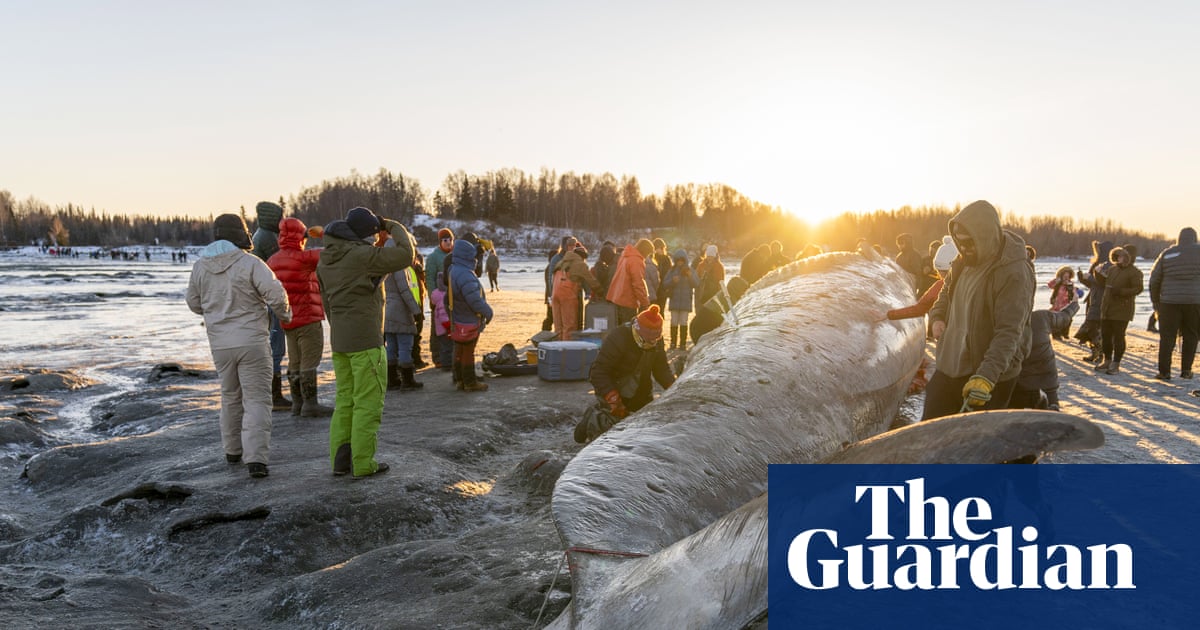
When a whale dies, its carcass can sink to the seafloor in a whale fall that supports long-lived deep-sea communities by providing nutrients and habitat. Whales die from stranding, starvation, predation, entanglement, toxic algal blooms, and ship strikes; mass mortalities can follow marine heatwaves. Increasing global ship traffic and whale size have raised ship-strike fatalities, with an estimated 20,000 whales killed annually. Beached whales present logistical, ecological and social issues influenced by tide, weather and coastal scavengers. Local responses involve necropsy difficulties, public fascination, bureaucratic delays and choices about disposal, relocation or repurposing.
"When a whale dies, its body descends to the bottom of the deep sea in a transformative phenomenon called a whale fall. A whale's death jump-starts an explosion of life, enough to feed and sustain a deep-ocean ecosystem for decades. There are a lot of ways whales can die. Migrating whales lose their way and, unable to find their way back from unfamiliar waters, are stranded. They can starve when prey disappears or fall to predators such as orcas."
"And because of their enormous size and the relentless rise in global ship traffic whales are now especially vulnerable to ship strikes. An estimated 20,000 whales are fatally hit each year; sometimes a ship captain rolls into harbor unaware a 40-ton body is draped across their bow. But whales can also wash ashore. What happens next depends on tide, weather and the creatures human, avian, canine, scavenger who share that coastline."
Read at www.theguardian.com
Unable to calculate read time
Collection
[
|
...
]