"A second form of non-self recognition involves targeting foreign nucleic acids directly. In eukaryotes, the RNA interference pathway cleaves viral double-stranded RNA into small interfering RNAs that then guide Argonaute proteins to complementary RNA sequences, leading to the degradation of viral RNA. In bacteria, various 'direct defence' systems also specifically target foreign DNA."
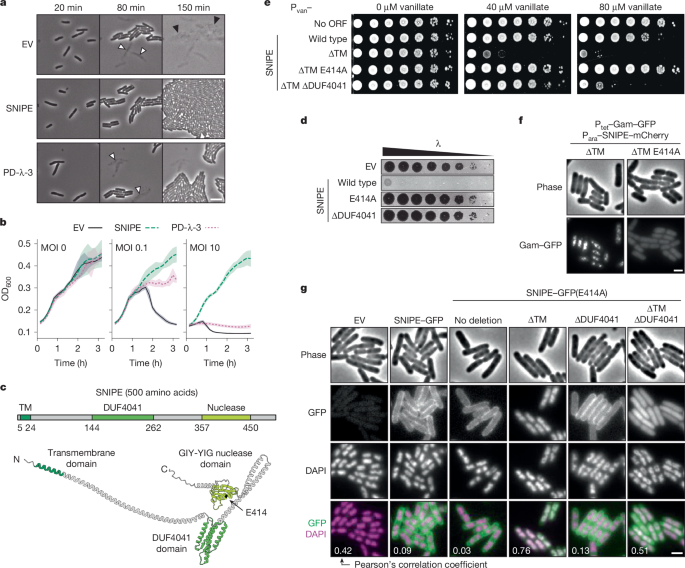
"A previous genetic screen identified a direct defence system, provisionally named PD-λ-1, that potently blocks phage λ infection in E. coli. For reasons described below, we renamed this system surface-associated nuclease inhibiting phage entry (SNIPE). To confirm that SNIPE provides direct defence, we infected cells at a concentration of phage λ such that approximately half of the cells were infected."
Immune systems across all life forms distinguish self from non-self through pattern recognition and direct nucleic acid targeting. Eukaryotes use pattern-recognition receptors to detect pathogen features and RNA interference to degrade viral RNA, while bacteria employ CRISPR-Cas systems, Argonautes, and restriction-modification systems for similar purposes. A newly identified bacterial defense system called SNIPE (surface-associated nuclease inhibiting phage entry) represents an additional mechanism for directly identifying and degrading foreign nucleic acids. SNIPE functions as a membrane-bound nuclease that provides direct defense against phage infection, expanding the known repertoire of bacterial immune strategies beyond previously characterized systems.
#bacterial-immunity #phage-defense #nucleic-acid-recognition #snipe-system #direct-defense-mechanisms
Read at Nature
Unable to calculate read time
Collection
[
|
...
]