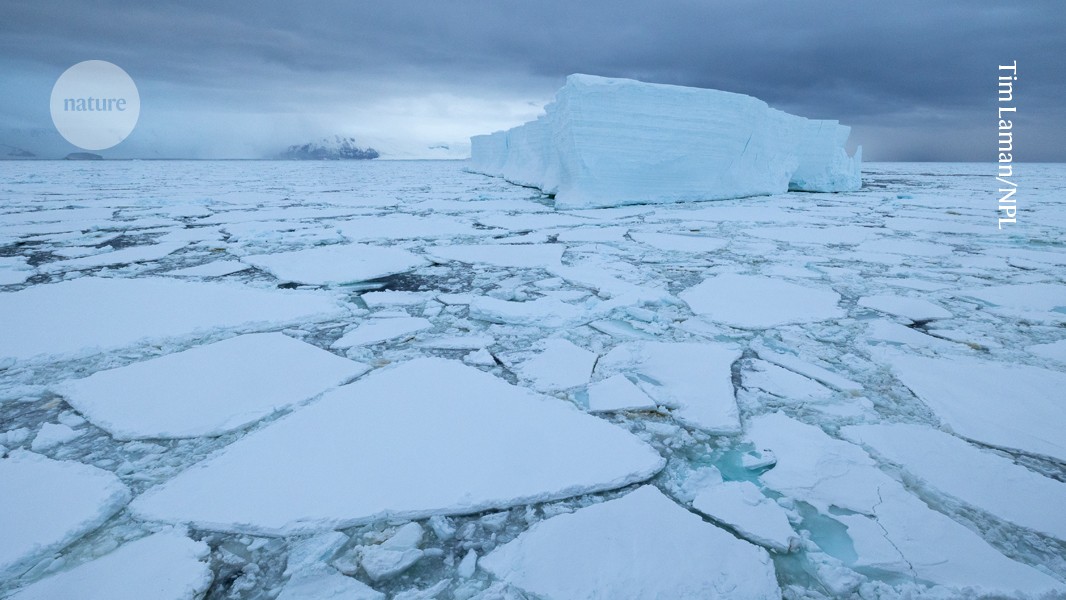
"At the height of a planetary freeze around 700 million years ago, ocean temperatures are most likely to have been -15 °C - much colder than any sea temperature recorded today or known to have occurred at any other time. During these proposed big chills, part of a theory known as Snowball Earth, glaciers reached the planet's equator. A blanket of ice cut off the usual patterns of biogeochemical exchange that the sea and land surface have with the atmosphere."
"That brought about big changes in marine ecosystems - for instance, iron that would usually have been oxidized by photosynthetic organisms was instead deposited on the ocean floor as iron-rich sediment. Kai Lu and Lianjun Feng at the Institute of Geology and Geophysics, Chinese Academy of Sciences, in Beijing and their colleagues looked at the iron isotopes in sedimentary rocks dating from the Snowball Earth phase from around the world, and explored possible scenarios for their formation."
Iron isotopes in Snowball Earth–age sedimentary rocks indicate deposition in seawater between −22 and −8 °C. At the height of a global freeze about 700 million years ago, ocean temperatures most likely fell to around −15 °C, far colder than any modern sea. Glaciers reached the equator and an extensive ice cover severed normal biogeochemical exchange between ocean, land, and atmosphere. Reduced oxidation of dissolved iron by photosynthetic organisms led to accumulation of iron-rich sediment on the seafloor. For seawater to remain liquid at such subfreezing temperatures, salinity must have been extremely high, implying intensely saline Snowball Ocean conditions.
Read at Nature
Unable to calculate read time
Collection
[
|
...
]