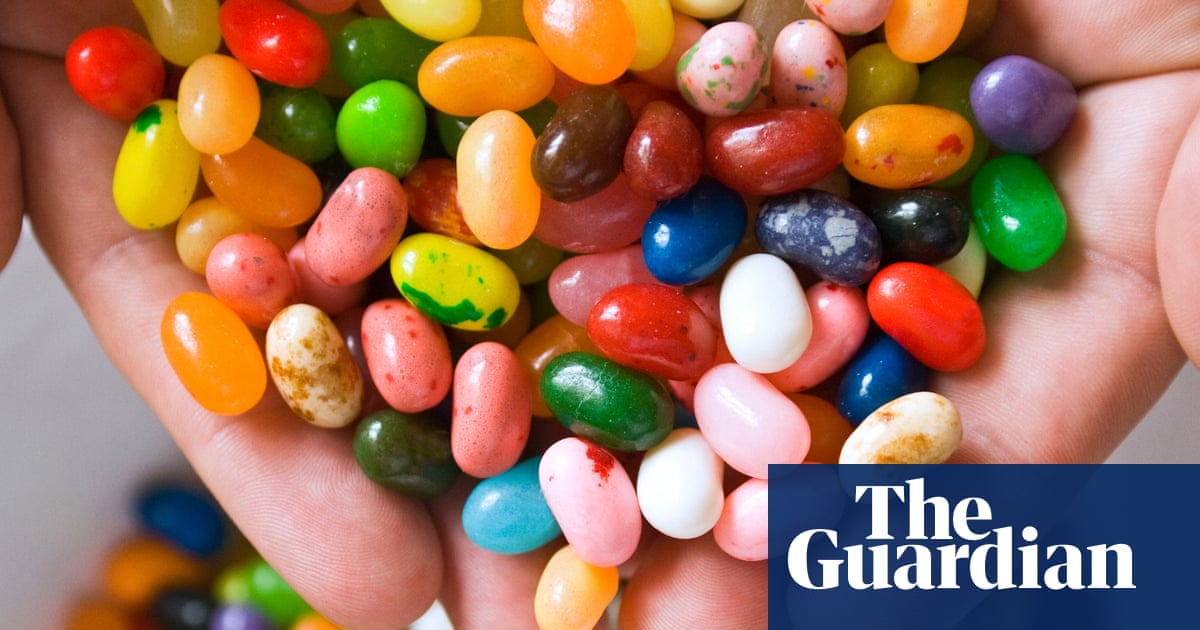
"A more extreme version of this experiment, he says, involves grating an onion and an apple, separately, then tasting each on a spoon with your eyes shut and your nose firmly held. They should taste the same until you take your fingers off your nose. Cobb says such experiments show how flavour largely consists of smell, not taste. When we chew, the volatile smells emitted by the food go up into our nose via the back of our mouth, where they stimulate our olfactory neurons, he says, adding that it is the combination of taste and smell that produces flavour. Without smell, things don't taste of much. We all discovered this during the first outbreak of Covid, when people temporarily lost their sense of smell."
"Matthew Cobb, a professor of zoology at the University of Manchester, suggests picking a sweet such as a jellybean and, with your eyes shut and holding your nose, putting it in your mouth and chewing, keeping your mouth shut. See if you can tell what the sweet tastes of you will probably just say sweet' and maybe have a vague idea of something else, says Cobb. After five seconds, take your fingers off your nose and you should get a sudden rush of sensation that enables you to correctly identify the flavour."
"With crackers a staple of Christmas, Sophie Scott, a professor of cognitive neuroscience at University College London suggests experimenting to see what can influence whether or not people laugh at a (terrible) joke. First, try reading those jokes to yourself and see if you laugh at any of them, she says. Second, read the jokes to someone else maybe a room full of people. Scott says to look and see if anyone laughs including you when you get to the punchline, or if they respond in some other way such as groaning"
Blindfolded or nose-held tasting demonstrates that flavour perception relies heavily on smell rather than basic taste. Holding the nose while chewing a sweet or tasting grated onion and apple makes identification difficult until smell is restored, producing a sudden rush of recognition. Volatile compounds travel retronasally to stimulate olfactory neurons, and the combination of taste and smell creates flavour. Temporary loss of smell dramatically reduces perceived taste intensity. Social dynamics influence laughter: jokes read alone may not elicit the same response as when presented to others, and audience reactions can shape whether people laugh or groan.
Read at www.theguardian.com
Unable to calculate read time
Collection
[
|
...
]