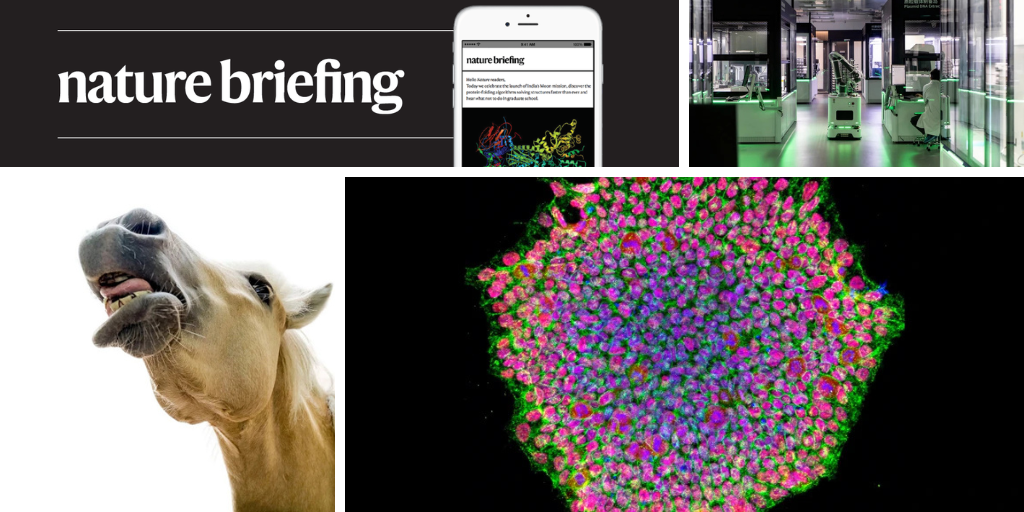
"Horses make the noise of their characteristic whinnies by producing two sounds at once: a low-frequency sound made in their vocal folds, and a high-pitched whistle produced by forcing air through the cartilage of their larynx. This ability makes horses one of a small group of animals that can make two-toned sounds, including several bird species and human beat boxers and throat singers."
"Artificial intelligence tools are already reducing demand for jobs that involve writing code or doing basic data analysis, researchers tell Nature. For example, research programmer roles - dedicated to creating scientific software and tools - are now obsolete, says computational biologist Brian Hie."
"You might temporarily get more research per dollar, says computational biologist Claus Wilke, but the cost would be a collapse of your pipeline and long-term decline."
Horses generate characteristic whinnies by producing two simultaneous sounds: a low-frequency sound from their vocal folds and a high-pitched whistle from forced air through larynx cartilage. This dual-sound ability places horses among a select group of animals, including certain bird species and human beat boxers, capable of multilayered vocalizations that enable complex communication. Separately, artificial intelligence tools are reducing demand for programming and data analysis positions in research. Research programmer roles are becoming obsolete as AI handles code creation and basic analysis tasks. Scientists express concern that job losses may eliminate career pathways for early-career researchers, potentially causing long-term research pipeline collapse despite short-term productivity gains. Additionally, Japan's health ministry approved conditional authorization for two stem cell therapies targeting Parkinson's disease and severe heart failure, despite testing in only 7-8 patients respectively.
#animal-communication #artificial-intelligence-impact #research-jobs #stem-cell-therapy #scientific-innovation
Read at Nature
Unable to calculate read time
Collection
[
|
...
]