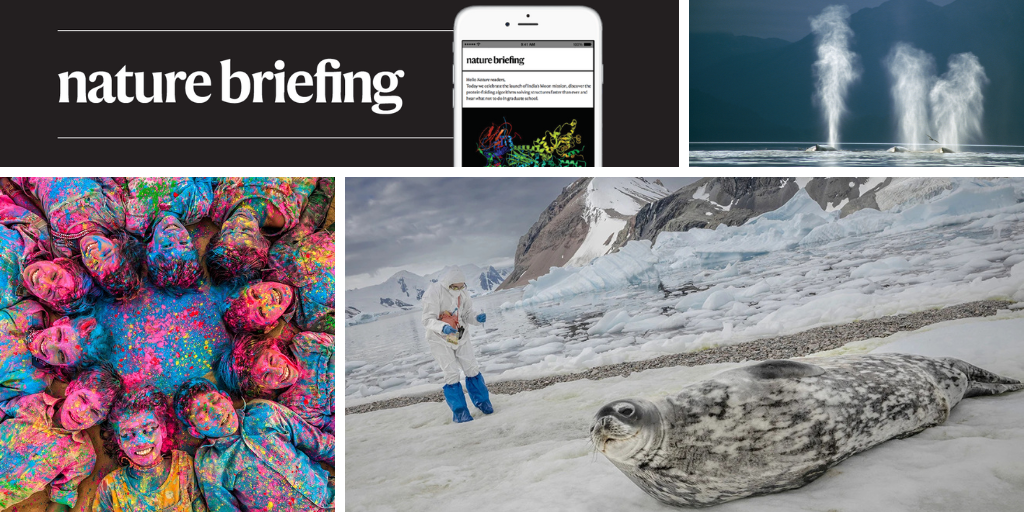
"A virus that sickens marine mammals has been detected in Arctic waters for the first time. Scientists used drones armed with petri dishes to collect samples of blow - the air and mucus whales expel from their blowholes - from whales in northern Norway. The team identified cetacean morbillivirus in samples from humpback whales ( Megaptera novaeangliae) and one sperm whale ( Physeter macrocephalus), though the humpbacks showed no symptoms of disease."
"A blood-cleaning method called Mirasol, which relies on the vitamin riboflavin and ultraviolet light to disable pathogens, will soon be tested to fight cancer. This month a phase I trial will study whether tumour cells, inactivated by the Mirasol process and then reintroduced into people with ovarian cancer, can trigger a safe immune response that could slow or prevent relapse."
Maternal microchimeric cells transferred to offspring can persist and pose challenges to established concepts of immune tolerance and self-recognition. A blood‑cleaning method called Mirasol uses riboflavin and ultraviolet light to inactivate pathogens and will be tested as a cancer vaccine by reintroducing inactivated tumour cells into people with ovarian cancer to stimulate protective immunity and potentially slow or prevent relapse. Drones fitted with petri dishes collected whale blow in northern Norway and detected cetacean morbillivirus in humpback and sperm whale samples, indicating drone sampling can help track pathogen transmission in migratory cetaceans. US policy highlights artificial intelligence and quantum science while visa restrictions may impede international research collaboration.
Read at Nature
Unable to calculate read time
Collection
[
|
...
]