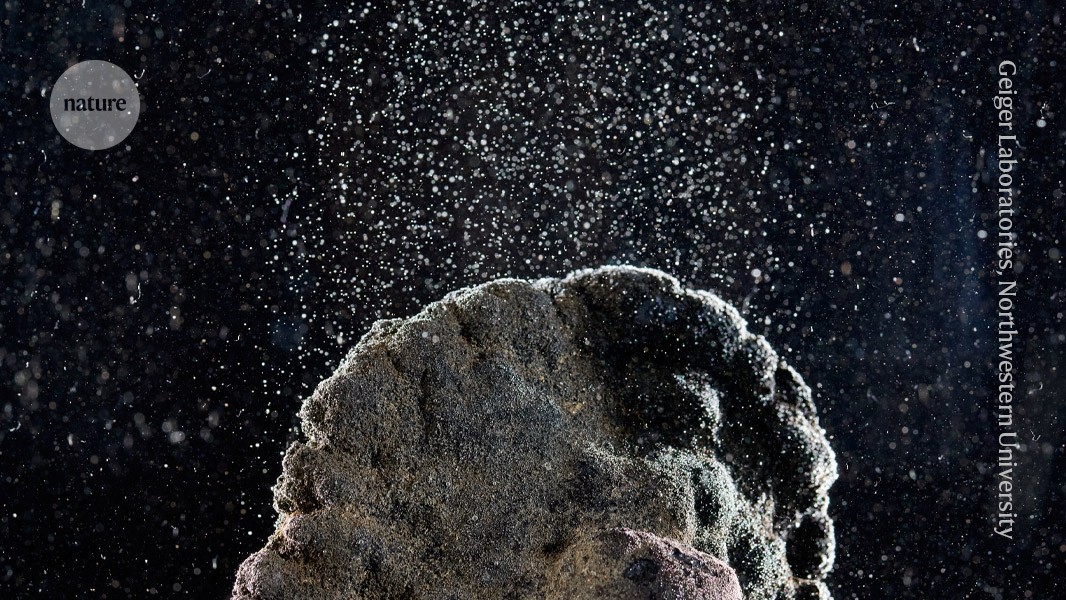
"The discovery of the oxygen 4,000 metres below the surface of the Pacific Ocean was first published in 2024 in Nature Geoscience. The team behind it is embarking on a fresh series of studies to verify their findings and establish what could be causing the phenomenon. At a press conference in London last week, the researchers unveiled a suite of instruments specifically designed to look at oxygen production, either on the sea floor or in laboratory experiments that reproduce deep-sea conditions, including 400 atmospheres of pressure."
"By May, project scientists will travel to the Clarion-Clipperton Zone - the region between Hawaii and Mexico where the original discovery was made - aboard the research vessel Nautilus. Speaking at the event, team leader Andrew Sweetman, a sea-floor ecologist at the Scottish Association for Marine Science in Oban, UK, described two probes - each with different capabilities - designed to land on the sea floor to take measurements and samples."
""We will be taking landers that are specifically built to look at dark-oxygen production," he says. The probes will have pH sensors to measure the concentration of protons in the seawater - high levels of which would suggest that water molecules are splitting, and that molecular oxygen is forming. The landers that made the original discovery could not measure pH because they were not designed to detect or study oxygen production, says Sweetman."
Significant quantities of oxygen were measured 4,000 metres beneath the Pacific surface in the Clarion-Clipperton Zone, a region known for polymetallic nodules. Follow-up studies have been funded with a US$5.2 million grant to verify the finding and identify mechanisms producing the oxygen in the absence of sunlight. An expedition aboard the research vessel Nautilus will deploy two different landers designed to take measurements and samples from the sea floor. The landers will include pH sensors to detect proton concentrations indicative of water splitting. Laboratory experiments will reproduce deep-sea pressures of about 400 atmospheres to test possible production processes.
Read at Nature
Unable to calculate read time
Collection
[
|
...
]