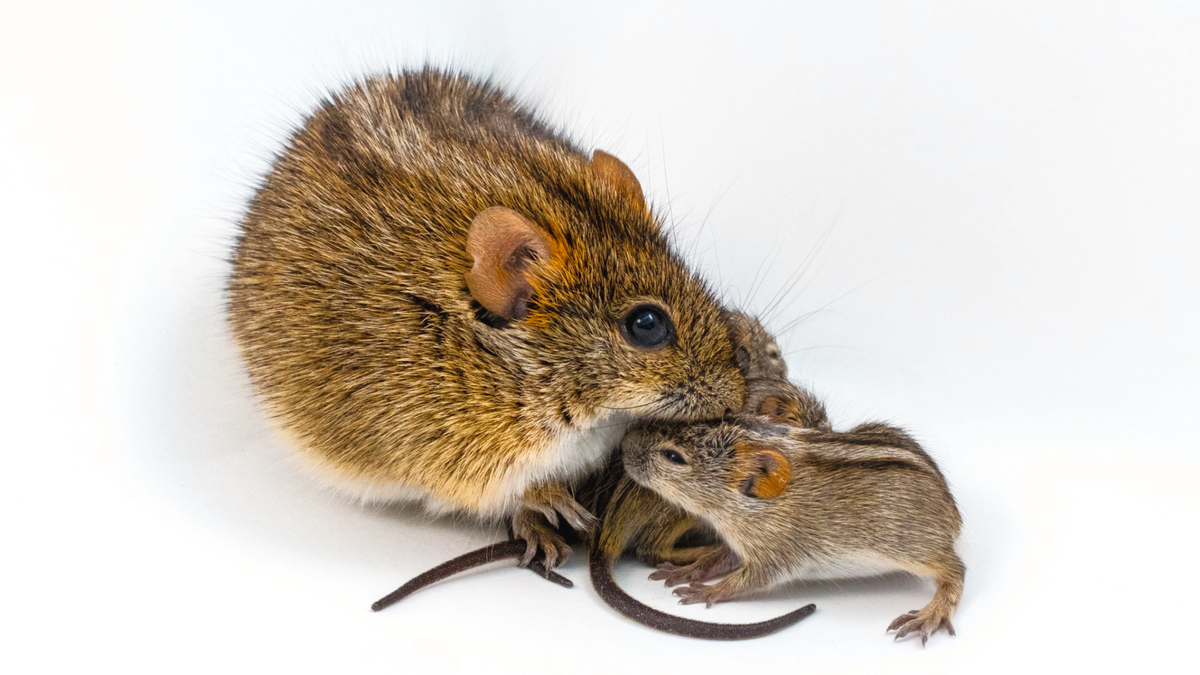
"Activating the gene in the caring mice also made them more aggressive toward pups, the researchers found. Interestingly, mice that lived in groups were more likely to have higher Agouti expression than male mice that lived alone, suggesting that aspects of a mouse's environmentsuch as resource scarcity or population levelmay be playing a role in its caregiving instincts, explains Forrest Rogers, a postdoctoral researcher at Princeton University and lead author of the study."
"An important takeaway from the study is that the male mice have what they need to be good dads, says Catherine Pena, an assistant professor of neuroscience at Princeton University and a co-author of the study . We didn't find that they needed new circuitry, she says. We didn't find that they had some unique evolution of cells in the brain that they needed to be dads. Rather the findings suggest that there may be optimal conditions to help promote one's own best parenting, she says."
Doting fathers occur in only about 3 to 5 percent of mammalian fathers. In African striped mice, a single gene called Agouti correlates with male caregiving: higher Agouti expression appears in more aggressive males than in caring males. Artificial activation of Agouti in caring males increases aggression toward pups. Males living in groups tend to show higher Agouti expression than solitary males, suggesting environmental factors such as resource scarcity or population density influence caregiving instincts. The findings indicate males possess the necessary neural circuitry for parenting and that optimal conditions may promote paternal caregiving.
Read at www.scientificamerican.com
Unable to calculate read time
Collection
[
|
...
]